
Application Cooling Guide
Industrial Chillers for Laser System Cooling Applications
Fiber lasers, CO2 lasers, optics, power supplies, cutting heads, and engraving systems depend on stable chilled water. A laser chiller protects sensitive components, supports temperature stability, and reduces downtime in precision laser applications.
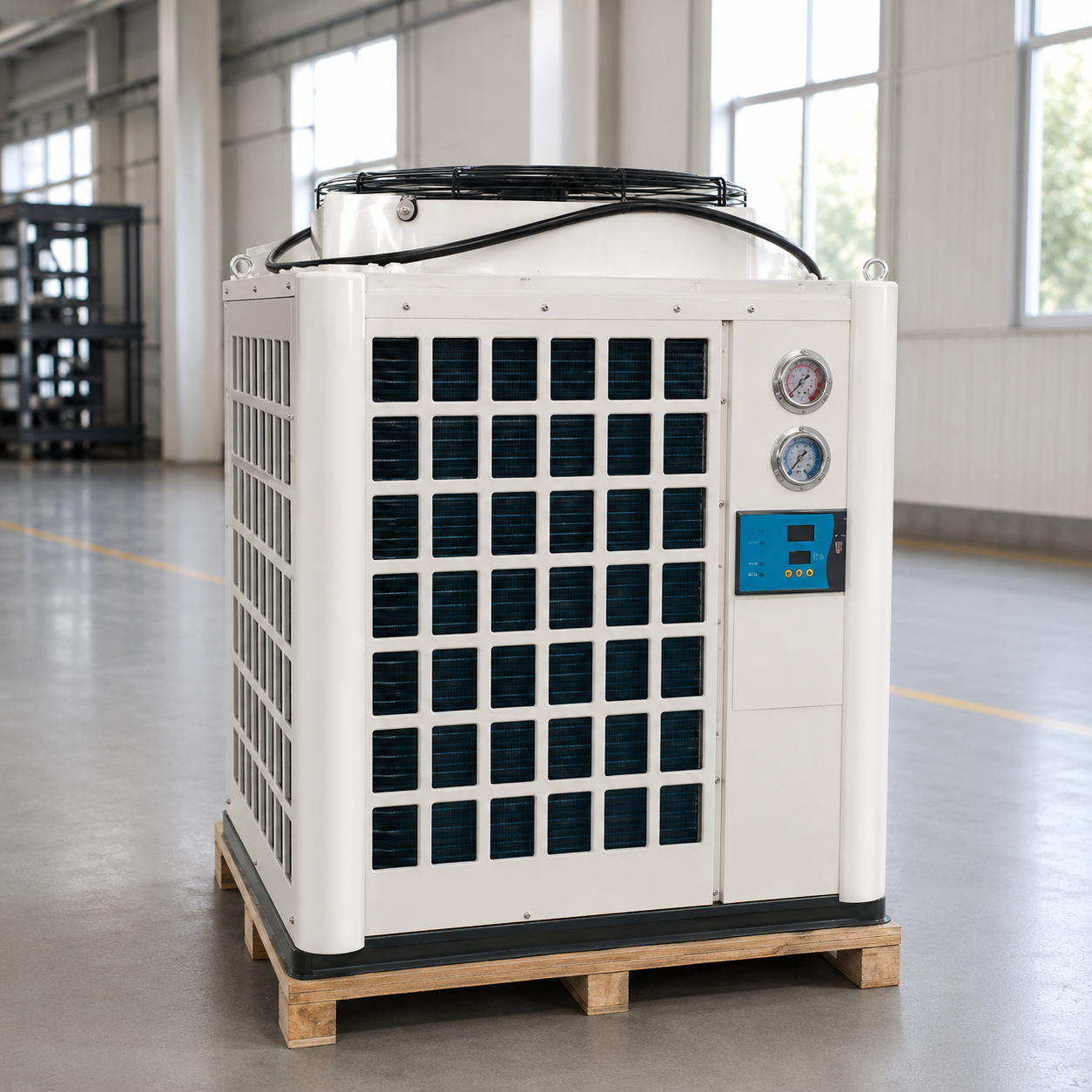
Why This Cooling Application Matters
Application-based chiller selection is different from choosing a generic cooling machine. The correct industrial chiller must match the real heat load, target process temperature, water flow, pump pressure, ambient condition, fluid quality, installation space, and production schedule.
For laser chiller applications, cooling performance is connected with production stability, equipment protection, product quality, and long-term operating cost. A chiller that is undersized, poorly matched, or not designed for the working environment can cause unstable temperature, frequent alarms, reduced production output, or unnecessary maintenance.
APT is an engineering-based industrial chiller manufacturer for precision process cooling and export-oriented custom cooling systems. The goal is to help engineers, buyers, OEM equipment manufacturers, and project managers understand the cooling logic before requesting a quotation.
Quick Application Summary
Cooling Target
Laser source, optics, power supply, cutting head, engraving system, and coolant loop.
Main Challenge
Temperature fluctuation, water quality, compact layout, low-flow alarms, and heat load changes.
Recommended Solution
Compact or custom laser chiller with stable temperature control, clean water circuit, and suitable pump.
Typical Industries / Equipment
Fiber laser cutting, CO2 laser engraving, marking systems, welding systems, and OEM laser equipment.
Main Cooling Requirements
A process chiller should be selected from the application conditions, not only from nominal horsepower. Important data includes cooling capacity, inlet and outlet temperature, ambient temperature, pump flow and pressure, heat exchanger material, condenser type, power supply, control system, and installation environment.
In export projects, the same chiller model may need different voltage, refrigerant configuration, condenser sizing, pump selection, language interface, or packaging support. APT evaluates these details before recommending an air-cooled, water-cooled, compact, or custom industrial cooling system.
For continuous production, reliability depends on more than the compressor. Industrial-grade components, properly sized condensers, stable water circulation, clean heat exchange, protection alarms, and service access all influence field performance.
Before purchasing, buyers should avoid comparing chillers only by compressor horsepower or cabinet size. Two chillers with the same nominal HP may have different real cooling capacity when outlet temperature, condenser condition, ambient temperature, evaporator type, and pump configuration are considered. A technical quotation should explain the operating assumptions behind the recommended model.
Useful inquiry data includes process equipment type, current heat source, target outlet temperature, acceptable temperature range, water flow, pump pressure, pipe distance, power supply, ambient temperature, installation space, and expected operating hours. If the process fluid is not clean water, provide water quality, chemical concentration, pH, viscosity, or material compatibility information before final heat exchanger selection.
For export projects, voltage, frequency, refrigerant preference, packaging, local service access, and spare parts planning should be discussed early. This helps the project team avoid selecting a chiller that looks correct in a catalog but becomes difficult to install or maintain after arrival.
Application Pain Points
Temperature Drift
Laser output and optical alignment may be affected when cooling water temperature is unstable.
Sensitive Components
Laser sources, optics, and power supplies require clean, reliable cooling to reduce overheating risk.
Compact Equipment Space
OEM laser equipment may require compact chiller layout or integrated cooling design.
Water Quality Control
Poor water quality can cause scaling, blockage, and reduced heat transfer in sensitive cooling channels.
APT Chiller Solution Approach
APT Chiller reviews laser cooling requirements based on laser power, cooling capacity, temperature accuracy, flow rate, pump pressure, water quality, installation space, voltage, and OEM integration needs. For precision equipment, APT can evaluate whether 卤1掳C, 卤0.5掳C, or tighter control is required. Compact air-cooled chillers are common, while custom configurations may be used for higher power or special installation conditions.
APT also reviews condenser type, power supply, control system, installation environment, water quality, filtration, tank volume, spare parts access, and maintenance conditions. This application-based chiller selection process helps reduce mismatch between quotation and site operation.
For OEM equipment manufacturers and overseas industrial buyers, APT can support custom cooling capacity, process-specific heat exchanger material, pump selection, voltage adaptation, high ambient industrial operation, and engineered continuous production requirements.
Long-term cooling reliability also depends on maintenance planning. Air-cooled condensers need clean airflow and regular fin cleaning. Water-cooled systems need suitable water quality and scale prevention. Filters, pumps, tanks, heat exchangers, and sensors should be accessible for routine inspection.
APT recommends recording operating temperature, inlet and outlet temperature difference, pump pressure, water level, alarm history, and maintenance actions. These records help engineers identify whether a cooling issue comes from heat load change, poor ventilation, blocked filters, water quality, insufficient flow, or refrigeration system protection.
Recommended Chiller Configuration
| Application / Equipment | Cooling Requirement | Recommended Chiller Design |
|---|---|---|
| Fiber laser source | Stable coolant temperature and clean water loop | Compact air-cooled chiller with suitable flow and protection |
| CO2 laser tube | Continuous water cooling and overheating protection | Small or medium chiller with stable tank temperature control |
| Laser cutting head | Precision cooling and low contamination risk | Closed-loop chiller with filtration and flow monitoring |
| OEM laser system | Integrated layout and signal interface | Custom compact chiller with voltage and communication review |
Related APT Cooling Resources
Continue reviewing related APT pages to compare product types, heat exchanger options, and application-specific cooling requirements.
How to Compare Chiller Quotations for This Application
When comparing supplier quotations, review more than the model name and price. Check whether the proposal clearly states cooling capacity conditions, target water temperature, ambient temperature, pump flow, pump pressure, condenser type, heat exchanger material, power supply, and control features. A lower quotation may exclude important engineering details that become costly during installation.
For industrial production, a good chiller proposal should also explain why the selected configuration fits the application. It should identify whether the site needs air-cooled or water-cooled heat rejection, whether the fluid requires special material, whether high ambient design is necessary, and whether the pump can overcome the real piping resistance. This is especially important for overseas buyers who cannot easily modify the unit after delivery.
APT encourages customers to share drawings, process photos, existing equipment labels, water circuit sketches, and operating data where available. Even simple information can help engineers reduce selection uncertainty and provide a more practical recommendation for continuous production projects.
FAQ
Why do laser systems need dedicated chillers?
Laser sources, optics, and power supplies generate heat and need stable cooling to reduce overheating risk and support precision operation.
What temperature accuracy is needed for laser cooling?
It depends on the laser type and process. Some systems can use 卤1掳C, while precision applications may need 卤0.5掳C or tighter review.
Can APT provide compact laser chillers?
Yes. APT can review compact air-cooled chiller designs for laser equipment and OEM integration.
What water quality is recommended for laser chillers?
Clean water, proper filtration, and regular maintenance are important. Follow the laser equipment manufacturer鈥檚 water quality guidance.
What data should I provide for laser chiller selection?
Provide laser power, target temperature, flow rate, pump pressure, voltage, installation space, and required control accuracy.
Need help selecting the right chiller for your process?
APT engineers can help match cooling capacity, temperature range, pump pressure, heat exchanger material, condenser type, power supply, and installation conditions for your application.