
Chemical Processing Chiller for Industrial Process Cooling
APT chemical process chillers provide customized cooling for reaction cooling, extraction, condensation, mixing, chemical tank cooling, solvent process cooling, pharmaceutical processing, and temperature-sensitive production. Each system can be configured according to heat load, target temperature, chemical medium, corrosion risk, heat exchanger material, pump flow, pump pressure, explosion-proof or hazardous-area requirement by project review, voltage, and installation environment.
Quick Answer: What Is a Chemical Processing Chiller?
A chemical processing chiller is used to control process temperature for reactors, mixing tanks, chemical baths, plating lines, solvent processes and other industrial cooling applications. APT provides air-cooled, water-cooled and custom chemical chillers with stainless steel or corrosion-resistant heat exchanger options for demanding process environments.
For chemical process cooling systems, the chiller should be selected according to heat load, target temperature, chemical medium, corrosion risk, pump flow, pump pressure, heat exchanger material, installation environment, voltage, and whether a secondary cooling loop or corrosion-resistant configuration is required.
Key Chiller Selection Parameters
Reactor, tank, condenser, extraction equipment, mixing system, secondary loop.
Closed-loop chilled water cooling, secondary loop, direct heat exchanger cooling by review.
Small laboratory systems to large industrial chemical process chillers by heat load.
Project-based process temperature and chiller outlet temperature selection.
Stainless steel, titanium, plate, shell-and-tube, or custom exchanger by medium.
Configured according to process exchanger, pipe length, tank coil, and pressure loss.
Air-cooled, water-cooled, explosion-proof, anti-corrosion, or custom chemical chiller.
Digital controller, PLC, alarm output, remote signal, interlock optional.
What Is a Chemical Process Chiller?
A chemical process chiller is an industrial cooling system used to remove heat from reactors, tanks, condensers, extraction equipment, mixing systems, and process loops. It helps maintain target temperature, protect process stability, and support safe continuous or batch production.
Temperature Control
Maintains the process or equipment inside the required cooling range.
Process Stability
Supports repeatable operating conditions and reduces cooling-related fluctuation.
Equipment Protection
Helps protect pumps, heat exchangers, controls, and process equipment from overheating.
Custom Export Configuration
Voltage, pump, tank, control, documentation, and packaging can be reviewed by project.
Chemical Process Cooling Requirements
The cooling system should be selected according to real process load, target temperature, water circuit, pump requirement, ambient condition, and installation layout.
Reaction Heat Control
Exothermic processes may require stable cooling capacity and responsive control.
Corrosion Compatibility
Chemical medium and pH should be reviewed before heat exchanger selection.
Hazardous-Area Review
Solvent or hazardous areas may require protected electrical components.
Temperature Stability
Stable process temperature supports batch consistency and product quality.
Continuous Operation
Chemical plants may need long-duty operation with protection alarms.
Secondary Loop Design
Indirect cooling can protect chillers from corrosive or dirty process fluids.
Cooling Points in Chemical Process Systems
Different equipment layouts may require cooling for one or more circuits. The final configuration should be reviewed before model selection.
Reaction Vessel Cooling
Removes heat from synthesis, polymerization, or exothermic reactions.
Chemical Tank Cooling
Controls storage or process tank temperature.
Extraction Cooling
Supports solvent extraction and separation processes.
Condensation Cooling
Cools vapor condensation and solvent recovery systems.
Secondary Cooling Loop
Separates chiller water from chemical process fluid.
Recommended Chiller Selection Matrix
Use this matrix as a preliminary guide before confirming heat load, target temperature, flow rate, pump pressure, site condition, and control requirements.
| Cooling Requirement | Recommended Chiller Direction | Best For | Engineering Review | Next Step |
|---|---|---|---|---|
| Laboratory or pilot reaction system | Compact or custom process chiller | Small reactors, pilot testing, precise temperature control | Heat load, temperature range, flow, material compatibility | Request Custom Design → |
| General chemical tank cooling | Industrial air-cooled chiller | Standalone tanks, simple installation, no cooling tower | Tank volume, medium, pump flow, corrosion risk | View Air-Cooled Chillers → |
| Large continuous chemical production | Water-cooled industrial chiller | High heat load, continuous duty, plant utilities | Condenser water, cooling tower, working hours | View Water-Cooled Chillers → |
| Corrosive process medium | Custom corrosion-resistant chiller or secondary loop | Acids, solvents, salts, aggressive fluids | pH, chloride, material compatibility, heat exchanger | View Heat Exchangers → |
| Hazardous solvent area | Explosion-proof custom chiller by project review | Flammable vapors, hazardous area review | Area classification, cabinet, electrical components, controls | Submit Requirements → |
Reaction, Mixing, Extraction, Condensation, Storage, and Solvent Cooling Comparison
Different cooling points require different capacity, water quality, pump, heat exchanger, and control considerations.
| Cooling Area / Process | Typical Cooling Purpose | Chiller Selection Focus | Common Options |
|---|---|---|---|
| Reaction Cooling | Remove exothermic reaction heat | Heat load, response speed, target temperature, batch size | Custom chiller, PLC, secondary loop |
| Mixing / Blending Cooling | Control temperature during mixing heat generation | Viscosity, tank volume, flow rate, stability | Air-cooled or water-cooled chiller |
| Extraction Cooling | Maintain temperature-sensitive extraction process | Solvent, temperature range, heat exchanger material | Water-cooled or custom process chiller |
| Condensation Cooling | Condense vapor or recover solvent | Condensation load, inlet/outlet temperature, flow | Water-cooled chiller, heat exchanger review |
| Chemical Storage Cooling | Maintain storage tank temperature | Tank volume, ambient heat gain, fluid compatibility | Process chiller, tank coil, secondary loop |
| Solvent / Hazardous Process | Cooling where explosion risk may exist | Area classification, vapor, electrical protection | Explosion-proof custom chiller by project review |
Typical Chemical Process Chiller Specification Range
Final specifications should be confirmed according to real equipment data and project conditions.
| Cooling Capacity | Small lab systems to large industrial systems according to heat load, batch size, tank volume, and duty |
| Cooling Medium | Water, glycol water, thermal fluid, clean secondary loop water, or project-specific fluid by review |
| Outlet Temperature | Set according to process requirement, reaction temperature, and fluid freezing point |
| Temperature Stability | ±1°C common option, tighter control by process review |
| Heat Exchanger | Stainless steel, titanium, plate heat exchanger, shell-and-tube, tank coil, or secondary loop by chemistry |
| Pump Flow | Configured according to heat exchanger, tank coil, pipe length, and circulation requirement |
| Pump Pressure | Standard or customized according to pressure loss, filters, exchanger, and layout |
| Chiller Type | Air-cooled, water-cooled, explosion-proof, anti-corrosion, or custom chemical process chiller |
| Control | Digital controller, PLC, alarm output, remote start/stop, interlock optional |
| Installation | Indoor plant room, chemical workshop, hazardous area review, high ambient, or outdoor option |
Custom Engineering Options
APT can configure chillers according to cooling capacity, pump flow, pump pressure, heat exchanger material, control logic, voltage, and site layout.
Corrosion-Resistant Heat Exchanger
Stainless steel, titanium, shell-and-tube, plate, or custom exchanger by medium.
Explosion-Proof / Hazardous-Area Electrical Review
Protected cabinet and components according to solvent or hazardous area review.
Secondary Cooling Loop
Indirect cooling to isolate chiller from corrosive or dirty process fluid.
Pump, Tank, and Flow Configuration
Pump pressure, tank volume, flow rate, filter, bypass, and process connection design.
Air-Cooled / Water-Cooled Layout
Air-cooled for practical installation or water-cooled for larger process heat loads.
Control and Export Configuration
PLC, alarm output, voltage, frequency, documentation, and packaging.
Chemical Process Chiller Project Case Examples
Project-based examples help buyers understand how APT reviews real cooling requirements before recommending a chiller configuration.
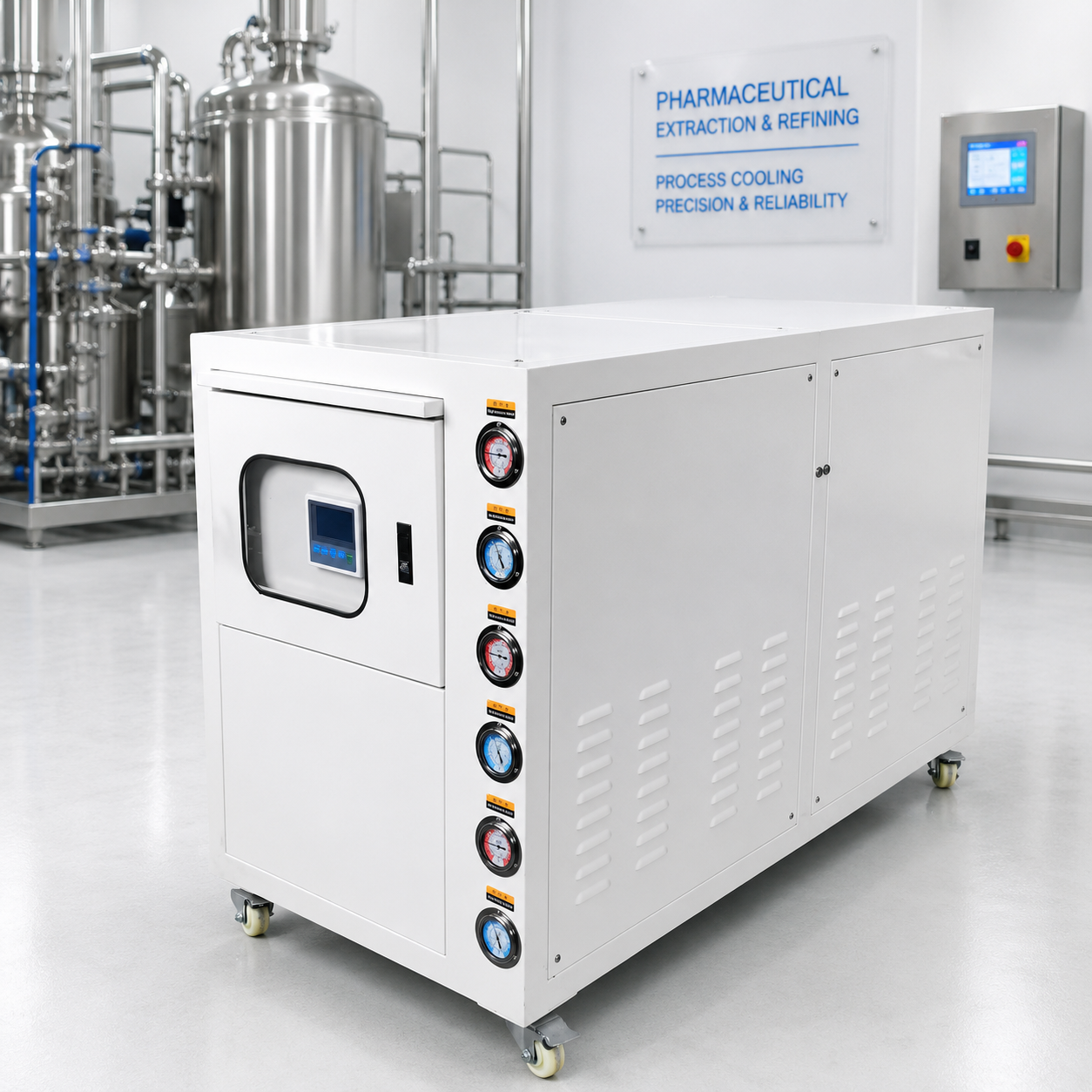
Pharmaceutical Extraction and Refining Cooling
A compact water-cooled chiller was configured for pharmaceutical extraction and refining equipment where stable cooling is required during temperature-sensitive processing.
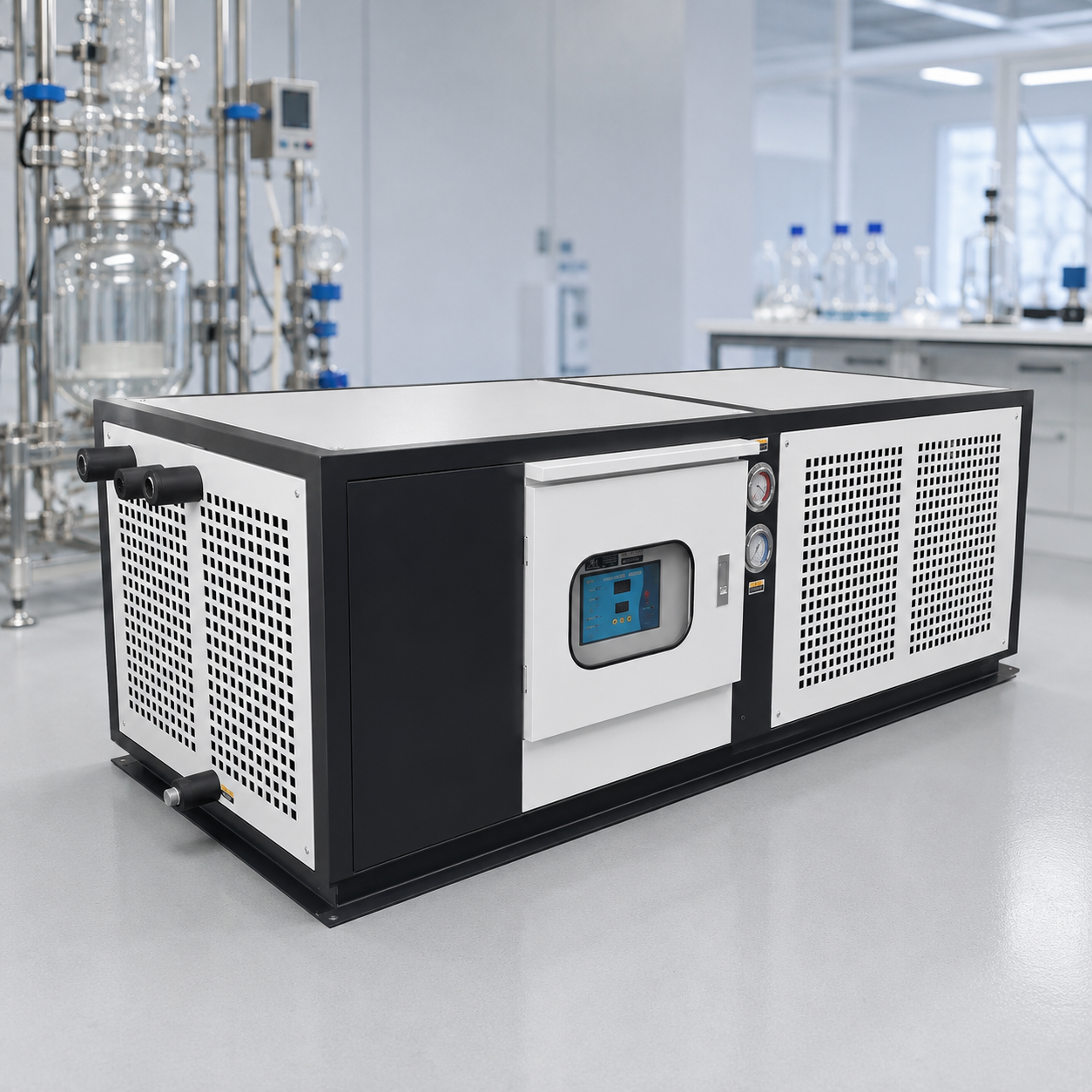
Laboratory Constant-Temperature Reaction Bath Chiller
A low-profile chiller was designed for laboratory reaction bath temperature control where precise and continuous cooling is required for pilot-scale chemical reactions.
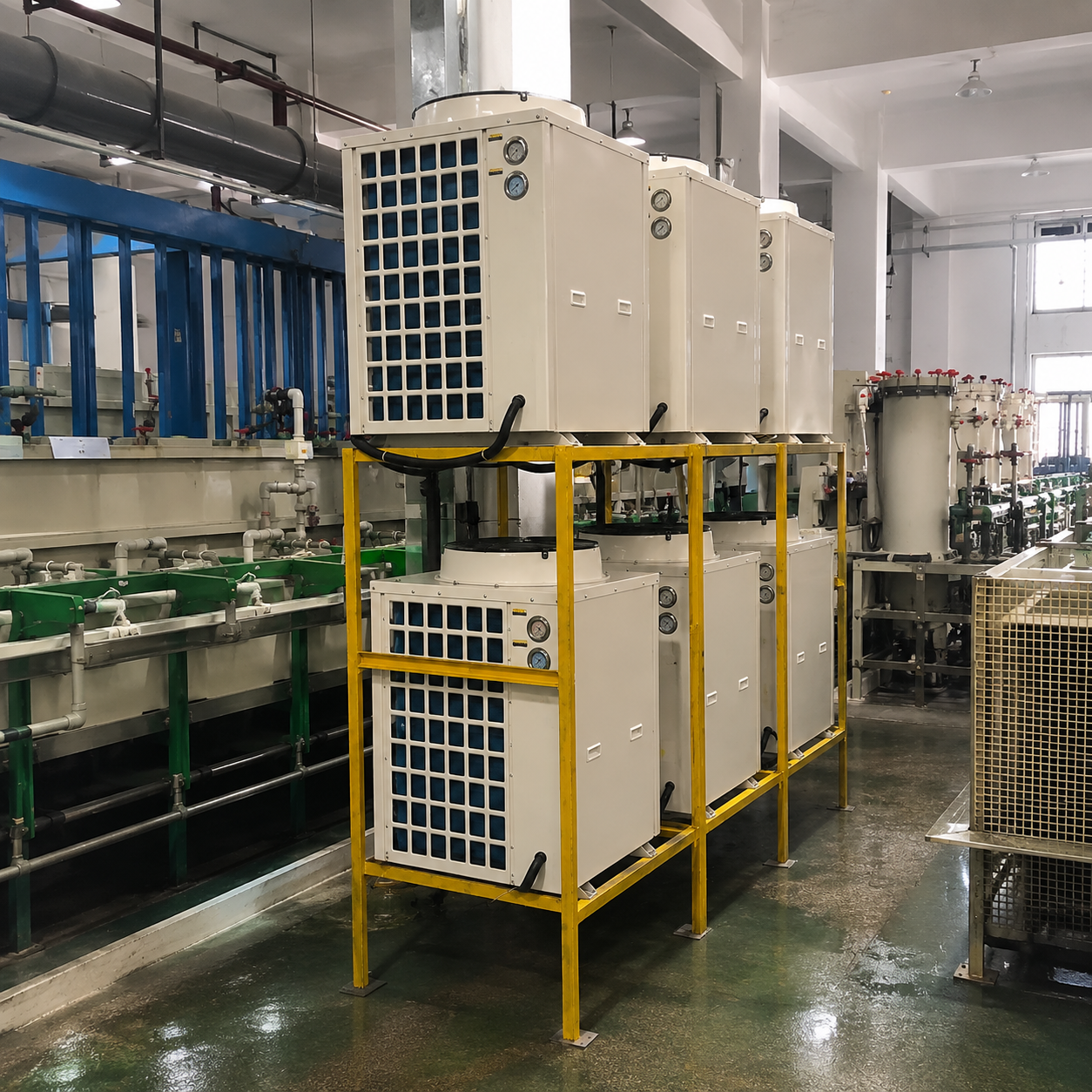
Electroplating Chemical Bath Cooling System
Multiple APT units were installed in an electroplating chemical process workshop to provide chemical tank cooling and temperature control.
Quote Information Checklist
To recommend a suitable chiller, APT engineers need process data, cooling circuit conditions, operating schedule, and installation details. If exact data is not available, photos, nameplate, drawings, or process notes can be used for preliminary review.
- Chemical process type
- Chemical medium and concentration
- pH, chloride level, corrosion risk
- Target process temperature
- Cooling capacity or heat load
- Batch size or tank volume
- Inlet/outlet temperature
- Required flow rate
- Required pump pressure
- Direct or secondary loop cooling
- Heat exchanger material requirement
- Explosion-proof or hazardous area requirement
- Ambient temperature
- Installation space
- Voltage, phase, and frequency
- Control requirements: PLC, alarm, remote signal, interlock
Manufacturing, Testing, and Export Support
As an industrial chiller manufacturer for process cooling applications, APT supports custom cooling capacity, pump flow, pump pressure, temperature control, heat exchanger review, air-cooled or water-cooled configuration, voltage options, factory testing, and export documentation.
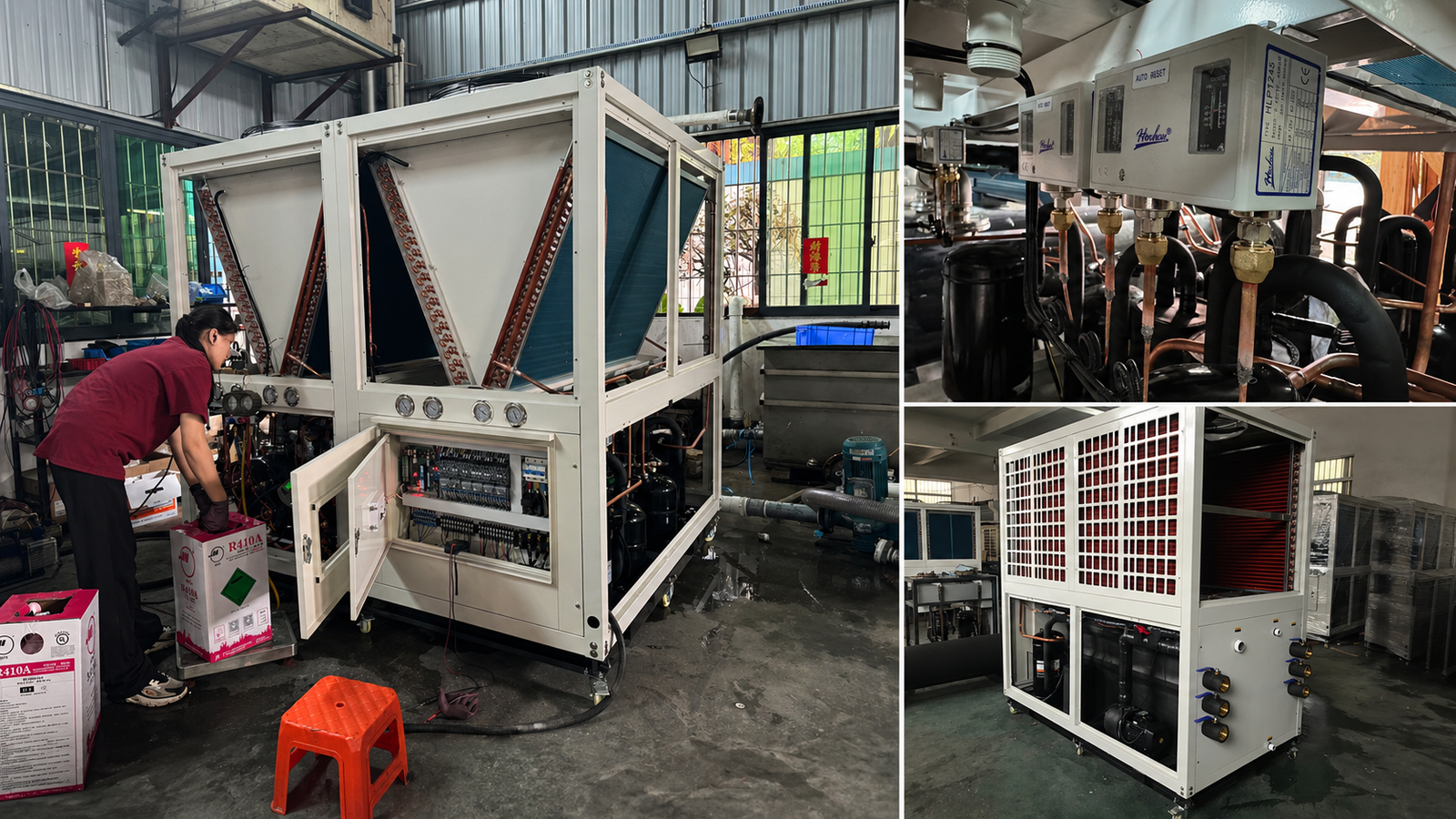
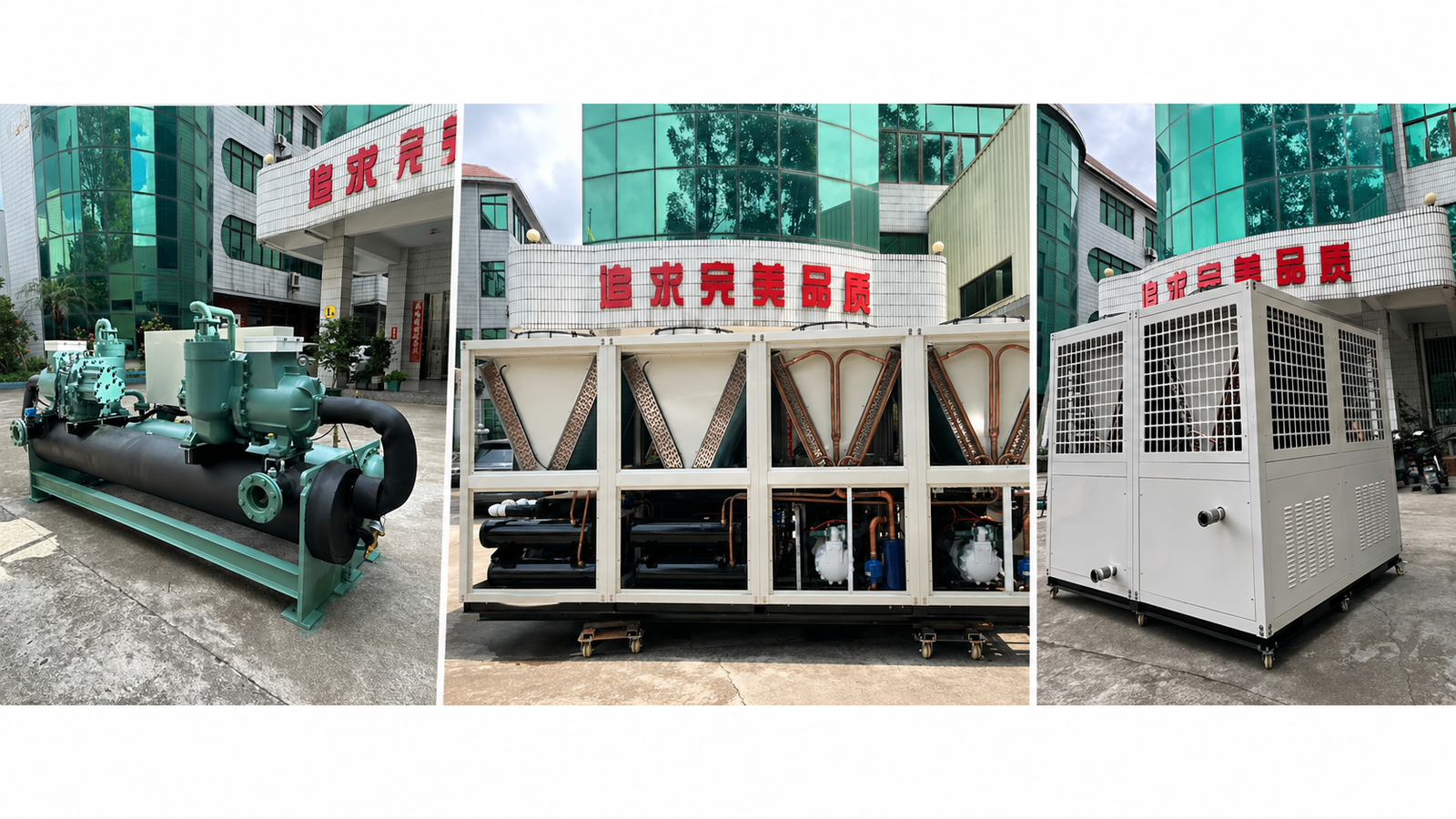
Workshop Production
Project-specific assembly with refrigeration components, pump, tank, heat exchanger, electrical cabinet, and water circuit.
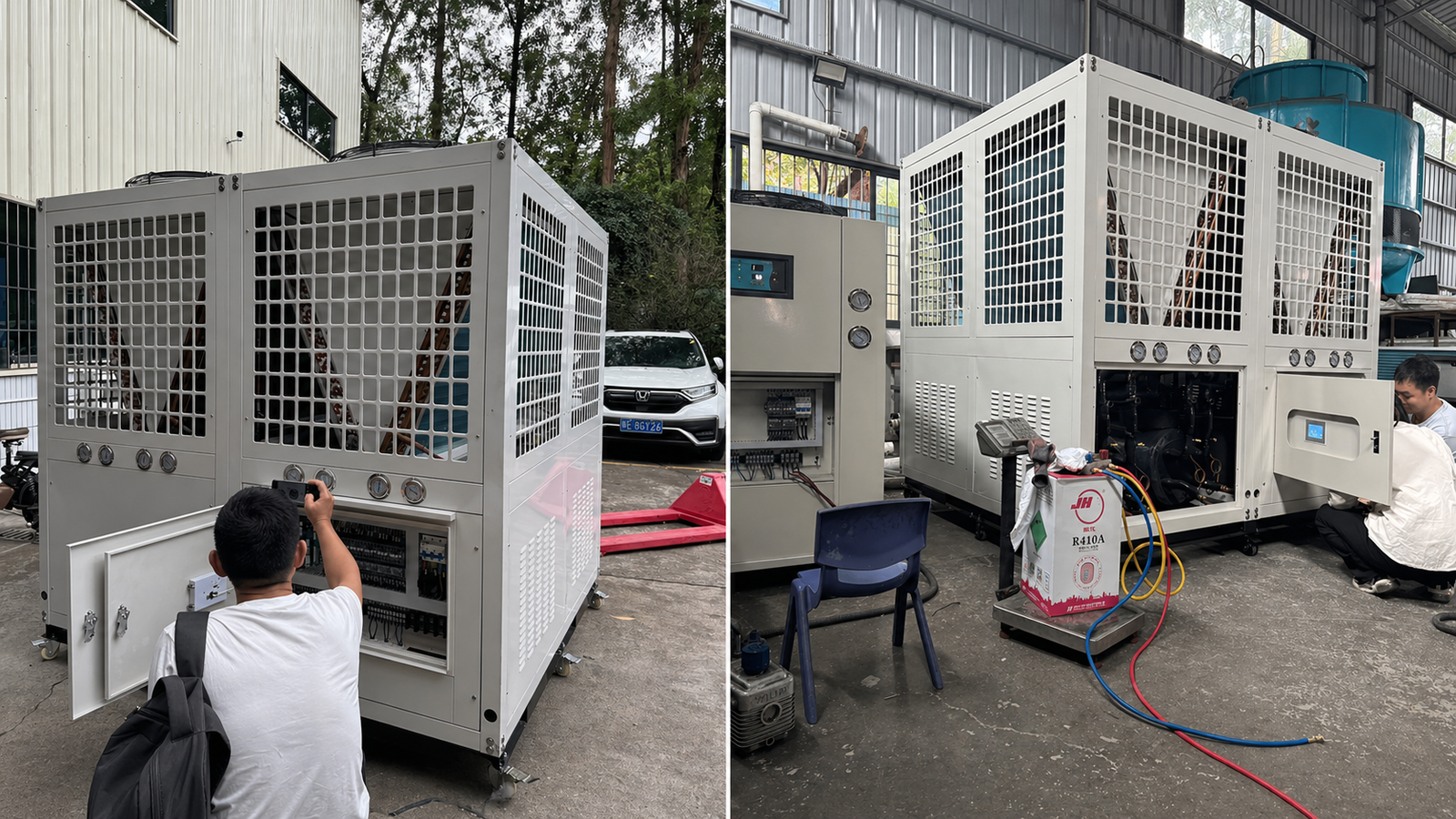
Performance Testing
Cooling performance, water circulation, pump pressure, temperature control, alarm logic, and pre-shipment inspection.
Export Documentation
Support for datasheets, manuals, packing details, voltage confirmation, and quotation documents.
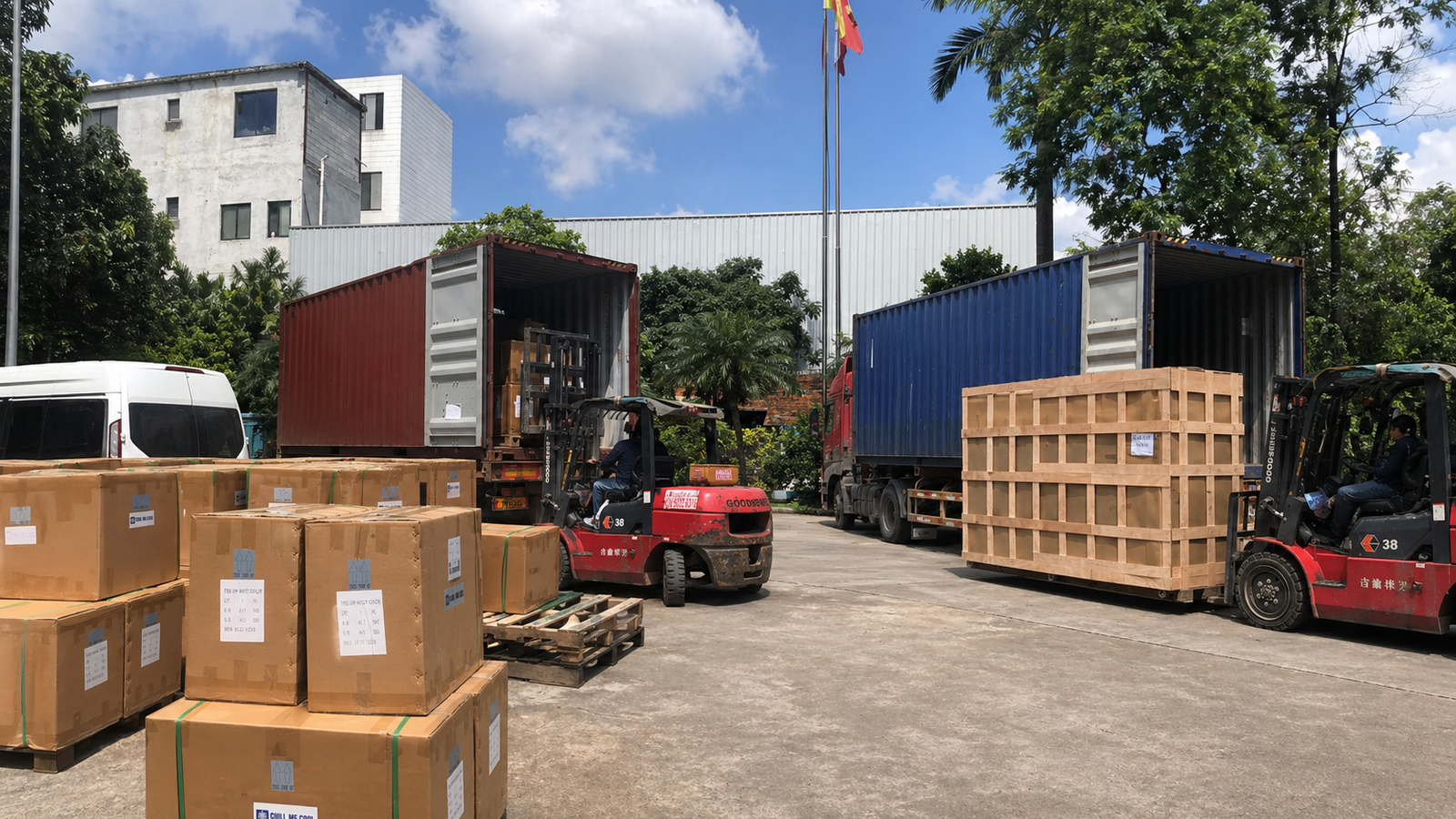
Packaging & Shipment
Export packaging, inspection photos, shipment coordination, and container loading support.
Related Product and Engineering Pages
Compare standard and custom APT chiller directions for this cooling application.
Related Industrial Cooling Applications
APT also supports other industrial process cooling applications that require stable chilled-water temperature and reliable equipment protection.
Electroplating Cooling
Review related process cooling requirements and chiller configuration direction.
ApplicationThermal Spray Cooling
Review related process cooling requirements and chiller configuration direction.
ApplicationLaser Cooling
Review related process cooling requirements and chiller configuration direction.
ApplicationInjection Molding Cooling
Review related process cooling requirements and chiller configuration direction.
ApplicationDie Casting Cooling
Review related process cooling requirements and chiller configuration direction.
Chemical Process Chiller FAQ
These questions help engineers and buyers prepare cooling data before requesting a formal quotation.
What is a chemical process chiller?
A chemical process chiller is an industrial cooling system used to remove heat from reactors, tanks, condensers, extraction equipment, mixing systems, or process loops.
What type of chiller is used for chemical process cooling?
Industrial air-cooled or water-cooled chillers are commonly used, depending on cooling capacity, installation conditions, temperature requirements, and whether corrosion-resistant or explosion-proof design review is needed.
Can APT chillers cool corrosive chemical liquids directly?
APT can provide stainless steel, titanium, or customized heat exchanger solutions depending on the chemical medium. For highly corrosive liquids, indirect cooling is usually recommended.
Do chemical chillers need explosion-proof design?
If the production area contains flammable solvents, vapors, or hazardous gases, explosion-proof or hazardous-area electrical review may be required by project conditions.
Can the chiller be customized for a specific chemical process?
Yes. APT can customize cooling capacity, temperature range, pump flow, pump pressure, tank size, heat exchanger material, control system, voltage, and installation layout.
Air-cooled or water-cooled: which is better for chemical plants?
Air-cooled chillers are easier to install, while water-cooled chillers are often more efficient for larger capacity and continuous production.
When should a secondary cooling loop be used?
A secondary loop should be considered when the process fluid is corrosive, dirty, hazardous, or not suitable for direct chiller contact.
What information is needed for a chemical process chiller quote?
Provide process type, chemical medium, heat load, target temperature, flow rate, corrosion level, explosion-proof or hazardous-area requirement by project review, voltage, and installation conditions.
When should I use a secondary loop for chemical process cooling?
A secondary loop should be considered when the process fluid is corrosive, dirty, hazardous, high-viscosity, or not suitable for direct contact with the chiller heat exchanger.
What heat exchanger material is suitable for chemical cooling?
Heat exchanger material should be selected according to chemical medium, concentration, pH, chloride level, temperature, and corrosion risk. Stainless steel, titanium, shell-and-tube, plate heat exchanger, or indirect secondary loop options can be reviewed.
Can APT provide low-temperature chemical process chillers?
Yes. APT can review low-temperature chemical process cooling requirements according to target temperature, cooling medium, glycol concentration, anti-freeze protection, compressor configuration, and operating conditions.
What information should I provide for a chemical process chiller quotation?
Please provide process type, chemical medium, heat load, target temperature, flow rate, pump pressure, corrosion level, heat exchanger material requirement, hazardous-area condition, voltage, ambient temperature, and installation layout.
Need a Chemical Process Chiller for Your Reaction or Process Line?
Share your chemical process type, heat load, target temperature, chemical medium, corrosion risk, flow rate, pump pressure, heat exchanger material requirement, hazardous-area condition, voltage, ambient temperature, and installation layout. APT engineers will help recommend a suitable air-cooled, water-cooled, corrosion-resistant, explosion-proof by project review, or custom chemical process chiller configuration.