
5HP Air Cooled Chiller for Laser Cutting Machine Cooling
A project-based reference showing how a 5HP air cooled industrial chiller can be reviewed for fiber laser cutting machine cooling, including laser source cooling, cutting head cooling, and optical circuit temperature control.
This remains a case reference and preliminary engineering direction. Final selection still depends on actual laser power, flow demand, target water temperature, water quality, and workshop conditions.
Quick Answer: What Chiller Was Reviewed for This Laser Cutting Project?
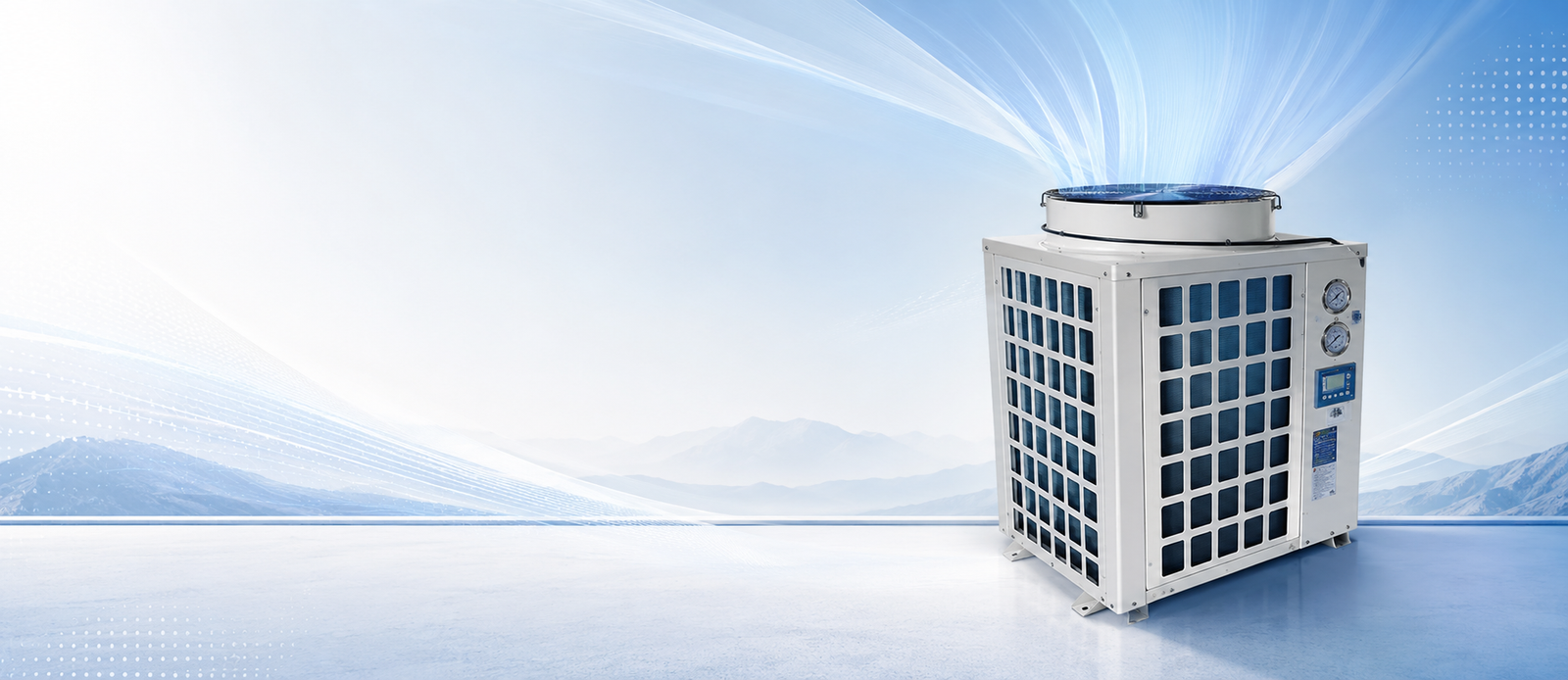
A 5HP air cooled industrial chiller was reviewed as the preliminary cooling direction for this laser cutting machine cooling project. The design direction supports closed-loop chilled water supply for the laser source, cutting head, and optical cooling circuit without requiring a cooling tower.
Project Background
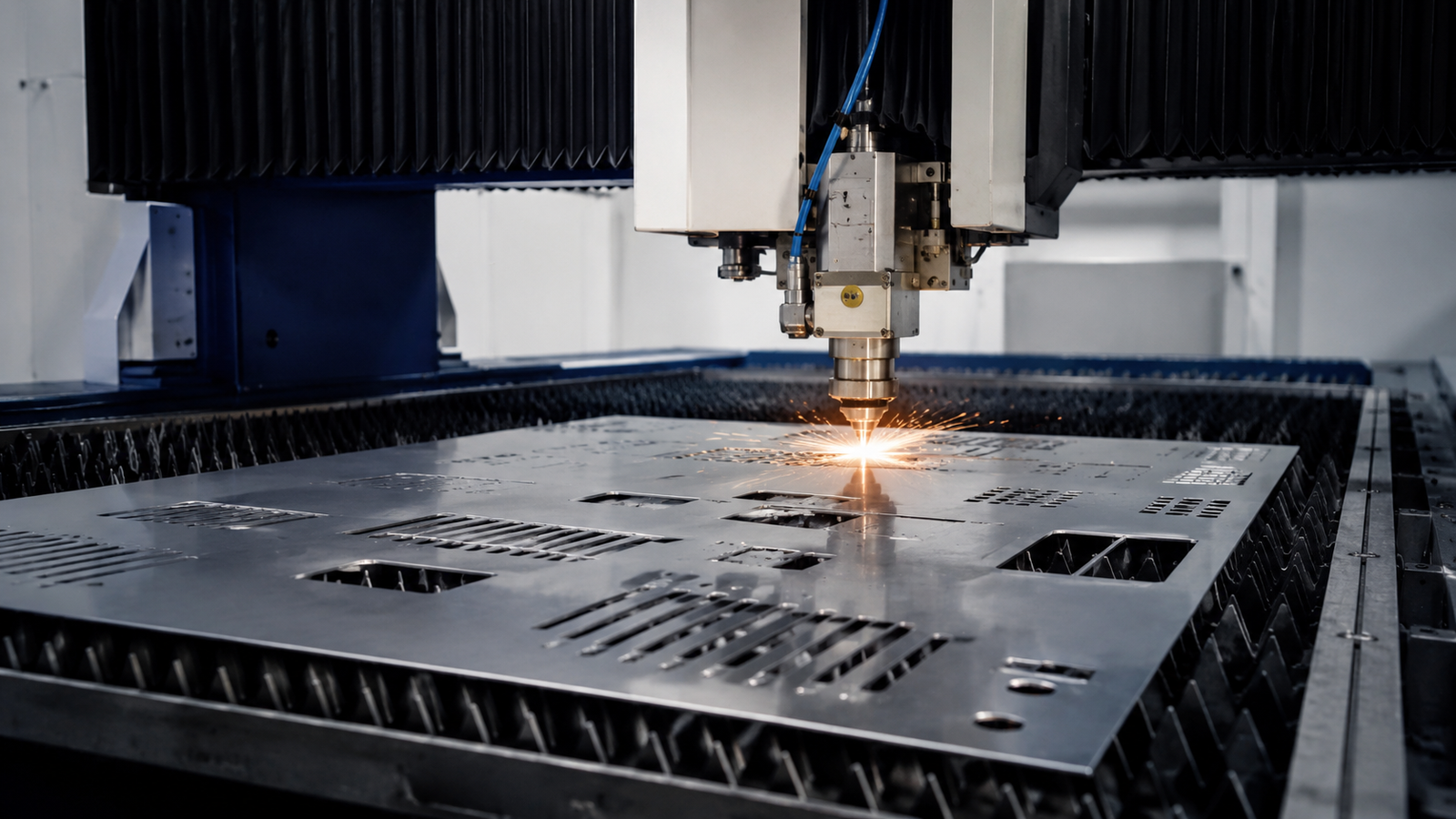
This project direction relates to a sheet metal fabrication workshop where a fiber laser cutting machine required stable closed-loop cooling for the laser source, cutting head, and optical cooling circuit. Stable process water temperature is important to support cutting quality, equipment duty stability, and daily workshop production continuity.
The site preferred an independent air cooled chiller because it did not want to add a cooling tower or connect the laser system to a central chilled water loop. A compact machine-side cooling direction was therefore reviewed for preliminary engineering discussion.
Cooling Challenge
Laser Source Heat Load
Fiber laser operation generates concentrated heat that must be removed continuously during cutting duty.
Cutting Head Temperature Control
Cooling stability helps protect the cutting head and maintain practical operating consistency.
Optical Cooling Stability
Closed-loop cooling should support stable temperature control for optics and laser-related components.
Cooling Water Cleanliness
Laser cooling circuits often require cleaner closed-loop water to reduce contamination and scaling risk.
Flow Rate and Pump Pressure
Water circulation must match the laser equipment loop resistance and cooling path requirement.
Temperature Stability
Laser equipment may need practical control stability according to equipment protection logic and process sensitivity.
Alarm and Protection Interface
Signal, alarm, and protection coordination may be reviewed between the chiller and the laser machine.
Ambient Temperature and Ventilation
Workshop ambient condition and ventilation margin affect condenser performance for air cooled equipment.
Compact Installation Space
Laser cutting workshops may need practical machine-side placement with controlled service access.
5HP Air Cooled Industrial Chiller Solution
A 5HP air cooled industrial chiller was reviewed as the preliminary case direction for this laser cutting machine cooling project. The air cooled design supports independent installation without requiring a cooling tower, which can simplify machine-side layout planning for a fiber laser cutting workshop.
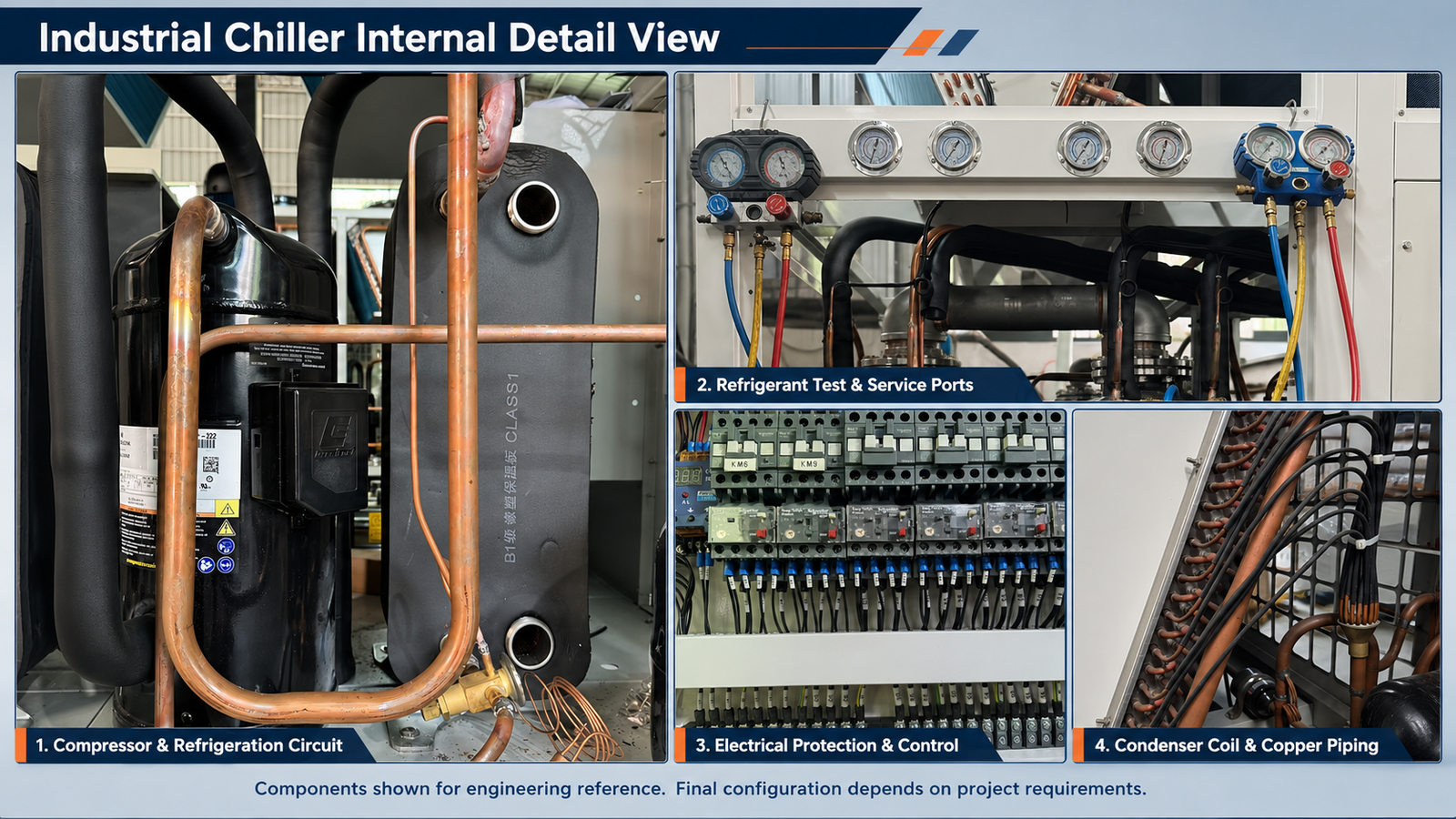
The proposed direction includes an air cooled condenser, industrial compressor, built-in water tank and circulation pump, digital temperature controller, and standard protection logic for compressor, pump, flow, pressure, overload, and temperature monitoring. It is suitable for laser source cooling, cutting head cooling, and auxiliary optical circuit temperature control where a compact but industrial-duty chiller is preferred.
Final configuration should still be confirmed according to actual laser power, heat load, target water temperature, flow rate, pump pressure, water cleanliness requirement, ambient temperature, voltage, and installation ventilation.
Engineering Review Matrix
| Engineering Item | Why It Matters | Data to Confirm |
|---|---|---|
| Laser Power | Provides the starting point for estimating the practical cooling direction. | Laser rated power, process duty, and operating mode. |
| Laser Source Heat Load | Helps confirm whether 5HP is suitable as a preliminary chiller reference. | Total heat load from the laser source and related support equipment. |
| Cutting Head Cooling Requirement | Protects the cutting head and supports practical process stability. | Cooling circuit arrangement, required temperature, and protection logic. |
| Target Water Temperature | Defines controller setpoint and practical operating range. | Required outlet water temperature and acceptable fluctuation. |
| Temperature Stability | Laser equipment may require tighter or more consistent temperature control than general machine cooling. | Equipment tolerance, alarm threshold, and process sensitivity. |
| Flow Rate | Ensures enough circulation through the laser cooling loop. | Required L/min or m3/h for the laser source and cutting head circuit. |
| Pump Pressure | Confirms whether the circulation pump can overcome loop resistance. | Required pump head, hose length, filters, and heat exchanger resistance. |
| Water Cleanliness | Protects optical and heat exchange reliability in a closed-loop system. | Water quality target, contamination risk, and filtration requirement. |
| Alarm Interface | Supports coordinated machine protection and system review. | Required alarm signal, interlock, or control interface. |
| Cooling Water Quality | Protects mold circuit cleanliness and equipment reliability. | Water quality standard, filtration plan, and contamination risk. |
| Ambient Temperature | Affects condenser capacity margin for an air cooled design. | Workshop ambient condition and seasonal temperature range. |
| Voltage and Frequency | Ensures electrical compatibility with destination requirements. | Available power supply and destination standard. |
| Installation Ventilation | Helps prevent hot-air recirculation around the air cooled condenser. | Machine-side placement, airflow clearance, and service access. |
Recommended Configuration Table
| Item | Preliminary Direction | Notes |
|---|---|---|
| Cooling Method | Air cooled condenser | Selected for independent installation without cooling tower dependency. |
| Capacity Direction | 5HP reference | Final size depends on actual laser heat load and process duty. |
| Cooling Circuit | Closed-loop process water | Reviewed for laser source, cutting head, and optical circuit cooling. |
| Typical Application | Fiber laser cutting machine / laser source / cutting head | Suitable for machine-side laser cooling direction review. |
| Outlet Temperature | Project-defined, often 7-25°C | Final setpoint depends on mold and process requirements. |
| Pump Selection | By required flow and pressure | Pump choice must follow actual circuit data and loop resistance. |
| Power Supply | 380-460V, 50/60Hz by destination | Electrical configuration should match the final workshop supply. |
| Final Review | Laser power / flow / pump pressure / temperature stability / water quality | Engineering confirmation is required before quotation and final model release. |
Why Air Cooled Chiller Was Considered
No Cooling Tower Required
Useful when the workshop prefers an independent process cooling system without condenser water infrastructure.
Easier Machine-Side Installation
Air cooled systems can simplify installation for stand-alone laser cutting machines and compact machine-side cooling loops.
Practical for Layout Changes
Independent air cooled direction can be easier to relocate or adapt when workshop layout changes.
The final air cooled direction still depends on ambient temperature, condenser airflow clearance, actual laser heat load, water quality target, and whether the cutting head and source share the same closed-loop cooling review.
Project Value
More Stable Laser Source Cooling
Supports practical heat removal review for continuous laser operation.
Better Cutting Head Temperature Control
Helps evaluate temperature control direction for sensitive cutting components.
Reduced Overheat Risk
Supports safer operating review for the laser source and auxiliary circuit.
Cleaner Closed-Loop Cooling Water
Improves discussion around filtration, water quality, and circuit cleanliness.
Easier Quotation Review
Creates a clear preliminary direction before final engineering review and quotation.
Related Pages
5HP Air Cooled Chiller
Review the related 5HP air cooled industrial chiller product direction.
ApplicationLaser Cooling System
Review broader laser source, optics, and cutting head cooling considerations.
CategoryAir Cooled Chillers
Compare the main APT air cooled chiller directions for industrial process cooling.
GuideChiller Selection Guide
Review supporting engineering topics before final chiller selection.
PDFDownload Case PDF
Download the case reference PDF after the laser cutting cooling review sheet is published.
QuoteRequest a Quote
Submit similar laser cutting cooling requirements for engineering review.
5HP Air Cooled Chiller for Laser Cutting Machine Cooling FAQ
Is a 5HP chiller enough for laser cutting machine cooling?
Not always. A 5HP chiller is only a preliminary direction for this case. Final capacity should be confirmed according to laser power, heat load, target water temperature, flow requirement, pump pressure, and actual duty cycle.
Why use an air cooled chiller for laser cutting?
An air cooled chiller can simplify installation because it does not require a cooling tower, making it practical for independent machine-side cooling or workshops without central chilled water.
Can one chiller cool both laser source and cutting head?
It can be possible when the combined cooling demand, required flow, and water circuit design are properly reviewed. Final confirmation depends on the actual machine configuration.
What data is required before final selection?
Prepare laser power, heat load, target water temperature, allowable fluctuation, flow rate, pump pressure, water quality requirement, voltage, ambient condition, and installation layout.
What water temperature is typical for laser equipment?
Many laser cooling projects are reviewed around 18-25°C outlet water temperature, but the final setting should follow the actual laser equipment requirement.
Does this replace a cooling tower?
For many standalone laser cutting projects, an air cooled chiller can avoid cooling tower dependency. Final suitability still depends on heat load, ambient condition, and installation ventilation.
Can the chiller communicate with the laser machine alarm system?
It can be reviewed according to the required alarm signal, interlock logic, or control interface. The final control arrangement depends on the project specification.
What pump data must be confirmed?
The required flow rate, pump head, hose length, filters, pressure drop, and loop resistance should be confirmed so the circulation system matches the equipment cooling circuit.
Why is water cleanliness important for laser cooling?
Water cleanliness affects heat transfer reliability, scaling risk, and protection of laser cooling components such as heat exchangers, laser source loops, and fine internal passages.
Can APT customize voltage, pump, tank, or control interface?
Yes. APT can review project-based customization for voltage, tank volume, pump configuration, controller, alarm signal, and other practical industrial cooling requirements.
Need a Similar Chiller for Laser Cutting Machine Cooling?
Share your laser machine details, laser power, target water temperature, temperature stability requirement, flow rate, pump pressure, water quality, workshop ambient condition, and electrical requirements. APT engineers can review whether a similar 5HP air cooled industrial chiller direction is suitable for your project.