
Thermal Spray and HVOF Chiller Projects for High-Temperature Coating Lines
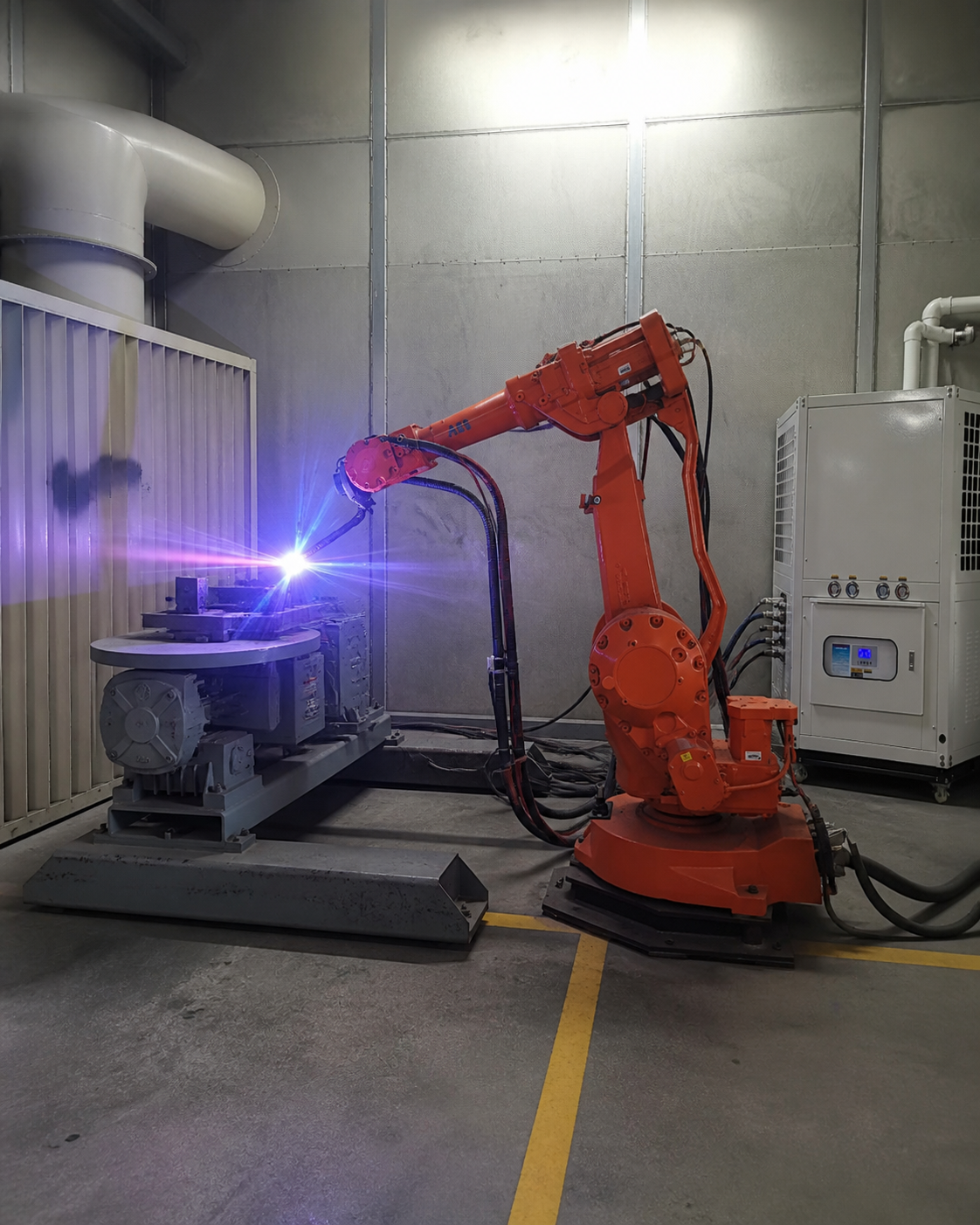
Thermal spray and HVOF chiller projects require stable closed-loop cooling for spray guns, power supplies, coating equipment, and high-temperature workshop operation. APT supports project-based chiller design for continuous thermal spray process cooling.
Project Summary
Project type
Closed-loop cooling for plasma spray, HVOF guns, coating booths, power supplies, and thermal spray production lines.
Main cooling challenge
High heat load, hot workshop air, contamination risk, pump pressure demand, filtration, and long operating hours.
Recommended design direction
Industrial air-cooled or water-cooled chiller with stable temperature control, strong pump configuration, filtration, and reliable condenser heat rejection.
Typical equipment / industry
Thermal spray booths, coating systems, aerospace repair, surface engineering, wear-resistant coating, and OEM spray equipment.
Project Overview
Industrial chiller projects are rarely solved by selecting a catalog model only. Real project conditions include cooling capacity, inlet and outlet water temperature, ambient temperature, condenser type, pump flow and pressure, tank volume, heat exchanger material, refrigerant circuit design, power supply, control logic, installation environment, and delivery requirements.
APT is an engineering-based industrial chiller manufacturer supporting precision process cooling, custom cooling systems, high ambient industrial operation, corrosion-resistant cooling design, explosion-proof design discussion, OEM integrated cooling, and export-oriented project communication.
The purpose of this project guide is to help engineers, overseas buyers, equipment manufacturers, purchasing teams, and project managers understand what should be reviewed before requesting a chiller quotation. Good project information allows APT to recommend a practical application-specific cooling configuration rather than a generic size.
Typical Thermal Spray and HVOF Chiller Project Scenarios
Thermal spray and HVOF coating lines often operate in demanding environments. A project may include a spray gun, power supply, control cabinet, powder feeder, cooling water circuit, spray booth, and auxiliary process equipment. The chiller must support stable process temperature control while the production line runs for long shifts.
In many projects, the cooling requirement is not limited to one device. Spray guns may need a minimum water flow and pressure; power supplies may require stable cooling water; and the workshop may have high ambient temperature caused by furnaces, spraying heat, dust collection systems, and enclosed booth layouts.
APT approaches thermal spray chiller projects as application-specific cooling configuration work. Instead of selecting only by horsepower, engineers review heat load, target temperature, flow path, filtration, ambient temperature, pump pressure, water quality, and maintenance access.
Why Coating Lines Need Project-Specific Cooling Design
Thermal spray process cooling must be reliable because overheating can affect gun stability, coating consistency, and equipment protection. Closed-loop industrial cooling helps prevent contamination from open water sources and provides a more controlled water circuit.
A standard chiller may not be suitable if the project requires high pump pressure, long piping, multiple cooling branches, heavy dust, or high ambient industrial operation. Spray equipment manufacturers and production plants often need custom cooling capacity, electrical configuration, and installation layout.
APT can discuss project-based chiller design with equipment integrators, overseas buyers, and plant engineering teams to align chiller configuration with the real coating line.
Main Engineering Challenges in High-Temperature Spray Workshops
High-temperature spray workshops challenge condenser heat rejection. Air-cooled chillers need enough airflow space and regular condenser cleaning because dust and overspray particles can reduce heat transfer. Water-cooled systems need reliable cooling water and condenser maintenance.
Pump flow and pressure configuration is another key issue. If the spray gun or cooling loop requires a specific minimum flow, undersized pumps or long piping can create low flow alarms and unstable cooling. Filtration must protect small channels from blockage while avoiding excessive pressure loss.
Water quality matters because scale, rust, or contamination can reduce heat exchanger performance and damage sensitive cooling passages. A project should define whether clean water, treated water, or a special fluid is required.
Equipment That May Require Cooling
Cooling targets may include HVOF spray guns, plasma spray guns, power supplies, induction heating equipment, control cabinets, gas panels, booth components, or auxiliary heat exchangers. Each cooling target may have its own temperature and flow requirement.
For multi-point systems, APT may review branch balancing, tank volume, pump head, filter location, pressure gauges, and service access. The goal is stable cooling delivery to the process, not only a nominal chiller capacity number.
Project Challenges to Review
High ambient workshop heat
Hot air around the chiller reduces heat rejection margin and may require T3 or high-ambient configuration.
Spray gun flow requirement
Some spray equipment requires reliable minimum flow and pressure for protection.
Dust and contamination
Filtration, condenser cleaning, and closed-loop water quality affect long-term operation.
Continuous production
Long shifts require durable components, stable control, and practical maintenance access.
APT Engineering Solution Approach
APT customizes industrial chillers according to real project conditions. Engineers review cooling capacity, inlet and outlet water temperature, ambient temperature, condenser type, pump flow and pressure, water tank volume, heat exchanger material, refrigerant circuit design, power supply and electrical control, PLC or communication requirements, installation environment, and export packaging needs.
This engineering-based technical support helps match the chiller to the process instead of forcing the process to fit a standard machine. For demanding applications, APT can discuss high-ambient condenser design, corrosion-resistant heat exchangers, explosion-proof design requirements subject to confirmed classification, special voltage, compact layout, OEM integrated cooling, and long-term service access.
Recommended Project Configuration Table
| Project scenario | Cooling requirement | Recommended chiller design | Key engineering note |
|---|---|---|---|
| Single spray gun cooling | Stable flow, clean closed-loop water | Compact or medium air-cooled chiller with suitable pump | Confirm gun flow and pressure requirement before sizing. |
| HVOF coating line | Higher heat load and long operating hours | Industrial chiller with larger tank and filtration | Review workshop ambient temperature and piping route. |
| High-temperature booth | Reliable heat rejection in hot air | High-ambient air-cooled or water-cooled chiller | Avoid hot air recirculation around condenser. |
| Multiple cooling branches | Balanced flow to different devices | Custom pump, manifold, gauges, and flow protection | Branch design should be reviewed with equipment drawings. |
Project Information Checklist Before Quotation
To help APT engineers prepare a suitable project-based chiller design, provide as much of the following information as possible:
- Process or equipment type
- Estimated heat load, machine power, or required cooling capacity
- Required inlet and outlet water temperature
- Ambient temperature and installation location
- Cooling medium or process fluid
- Required pump flow and pressure
- Power supply, voltage, phase, and frequency
- Heat exchanger material requirement
- Safety, electrical, or site standard requirement
- Photos, drawings, or layout information of the installation site if available
FAQ
What type of chiller is used for thermal spray and HVOF projects?
Thermal spray and HVOF projects commonly use closed-loop industrial chillers selected for cooling capacity, target temperature, pump flow, pump pressure, filtration, ambient temperature, and continuous operation.
Why is pump pressure important for spray gun cooling?
Spray guns and coating equipment may require a defined water flow through narrow channels. If pump pressure is insufficient, the equipment may not receive enough cooling even if the chiller capacity is adequate.
Can air-cooled chillers be used in thermal spray workshops?
Yes, but the installation must consider high ambient temperature, dust, condenser cleaning, airflow clearance, and hot air recirculation. Water-cooled or custom designs may be reviewed for demanding sites.
What information should be provided before a thermal spray chiller quote?
Useful information includes spray equipment type, heat load, target water temperature, required flow and pressure, ambient temperature, piping distance, power supply, and water quality requirements.
Can APT customize chillers for coating equipment manufacturers?
Yes. APT can discuss OEM cooling integration, pump configuration, tank size, control logic, voltage, filtration, condenser type, and export project requirements.
Need help designing a chiller for your industrial project?
APT engineers can help review your process conditions, cooling capacity, temperature range, pump pressure, condenser type, heat exchanger material, and installation environment. Share your application details, drawings, site conditions, and special requirements to start a practical project discussion.