
Solar-Assisted Industrial Chiller for Remote Equipment Cooling
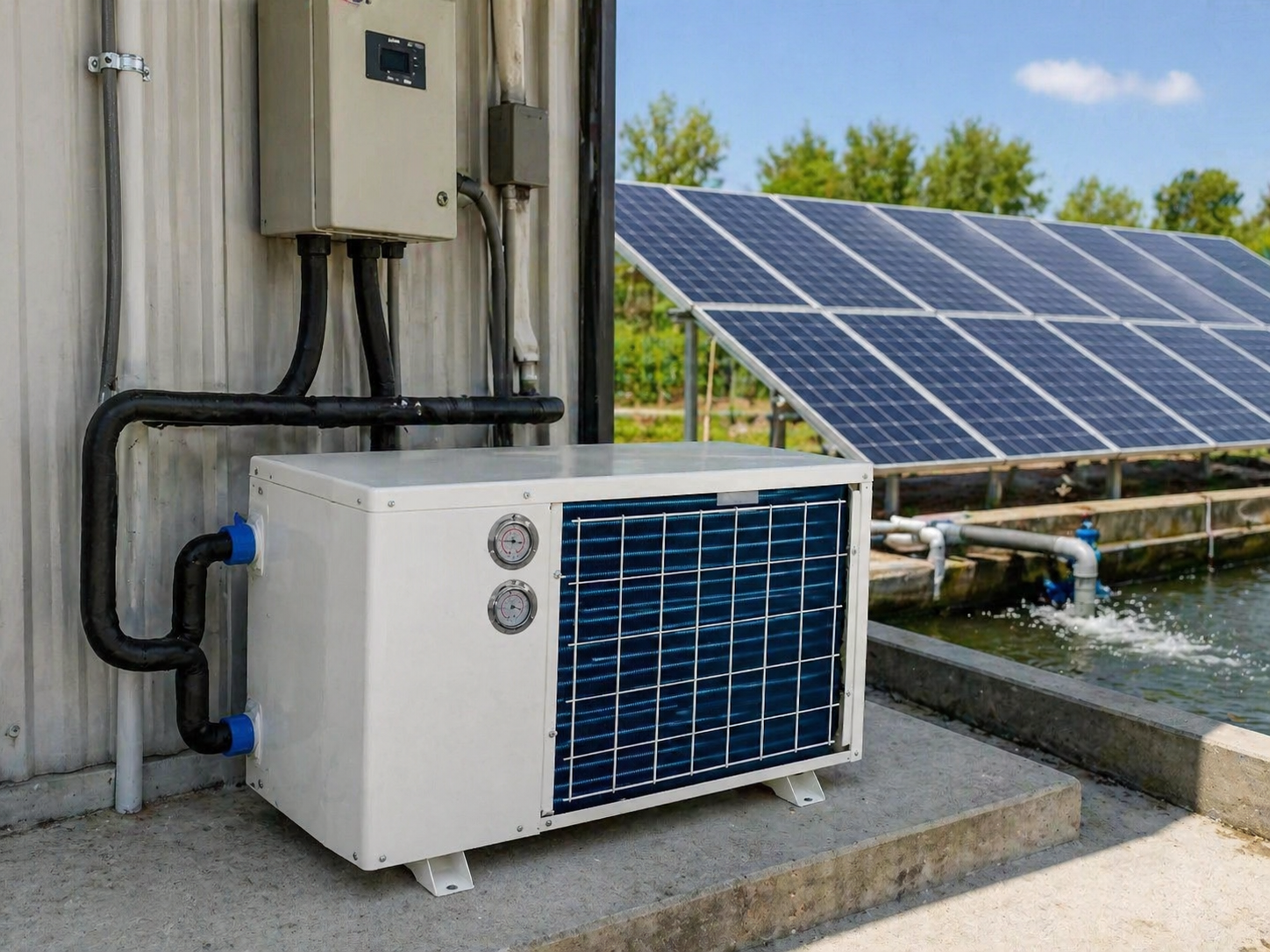
A project-based reference showing how a solar-assisted industrial chiller direction can be reviewed for remote equipment cooling where grid power is limited, unstable, or expensive.
This remains a case reference and preliminary engineering direction. Final configuration depends on cooling load, solar radiation, runtime, inverter size, battery autonomy, backup power, ambient temperature, and control logic.
Quick Answer: What Chiller Direction Was Reviewed for This Remote Cooling Project?
A solar-assisted industrial chiller direction was reviewed for this remote equipment cooling project. The design direction required cooling load confirmation, runtime analysis, solar radiation review, inverter and battery sizing, and backup power planning before final chiller and power architecture selection.
Project Background
This project direction relates to a remote equipment site where process cooling was required but grid power was limited, unstable, or too costly for continuous grid-only operation. The cooling discussion focused on whether solar support could reduce utility dependency while still keeping the remote equipment within its required thermal operating range.
Because the site condition required power-architecture review in addition to chiller selection, a solar-assisted industrial chiller direction was considered rather than assuming a standard grid-only process chiller layout would be suitable. The engineering review centered on cooling load, runtime, local solar radiation, inverter sizing, battery autonomy, backup power, and ambient installation conditions.
Cooling Challenge
Cooling Load
Cooling capacity demand determines both chiller sizing direction and power-architecture feasibility.
Required Runtime
Runtime window affects solar contribution, battery size, and backup power planning.
Solar Radiation by Location
Site-specific solar resource directly influences system feasibility and realistic hybrid design ratio.
Battery Autonomy
Battery backup duration must match the expected operating schedule and power continuity target.
Inverter Sizing
Inverter capacity must support both continuous load and startup conditions safely.
Compressor Starting Current
Compressor start behavior can strongly affect inverter and backup power design.
Backup Power Strategy
Reliable cooling often still requires generator or grid backup even when solar is included.
Ambient Temperature
Remote and outdoor locations may expose the chiller to higher ambient loads than indoor installations.
Outdoor Cabinet Protection
Cabinet rating, weather exposure, dust, and ventilation all affect remote deployment reliability.
Maintenance Access
Remote sites need practical service planning because maintenance response may be slower than normal.
Power Source Control Logic
Switching logic between solar, battery, grid, and backup power must be reviewed before final selection.
Solar-Assisted Industrial Chiller Solution
A solar-assisted industrial chiller direction was considered as the preliminary cooling path for this remote equipment project. The design direction was reviewed because the site needed process cooling support where grid power was limited or unstable, and the project required realistic coordination between cooling demand and available power sources.
The proposed direction includes an industrial chiller selected by cooling load and target temperature requirement, with power architecture reviewed according to solar availability, inverter capacity, battery autonomy, compressor startup behavior, and backup power strategy. Outdoor cabinet protection and ambient temperature were also reviewed as part of the remote installation logic.
This page should not be interpreted as guaranteed 100% solar-powered cooling or a system that requires no grid or battery support. Final configuration depends on cooling load, solar radiation, runtime, inverter size, battery autonomy, backup power, ambient temperature, and control logic.
Engineering Review Matrix
| Engineering Item | Why It Matters | Data to Confirm |
|---|---|---|
| Cooling Load | Cooling demand determines chiller selection direction and power-architecture feasibility. | Total heat load from the remote equipment or process loop. |
| Target Water Temperature | Defines cooling objective and process temperature requirement. | Required outlet temperature and acceptable fluctuation. |
| Required Runtime | Operating hours affect solar contribution, battery size, and backup power logic. | Expected hours per day and defined runtime windows. |
| Solar Radiation | Local solar resource affects energy yield and realistic solar contribution review. | Site location, irradiation data, and seasonal variation. |
| Battery Autonomy | Battery capacity influences continuity during low-solar or no-solar periods. | Required backup hours and battery reserve target. |
| Inverter Capacity | Inverter must support the required load profile and transient electrical demand. | Continuous power requirement and inverter rating margin. |
| Compressor Starting Current | Startup behavior can heavily affect inverter and battery selection logic. | Compressor type, startup current, and electrical protection approach. |
| Backup Power | Reliable process cooling usually still needs backup support beyond solar generation. | Generator, grid support, or other auxiliary power strategy. |
| Ambient Temperature | High ambient conditions reduce condenser margin and affect site suitability. | Site ambient range and peak outdoor temperature. |
| Installation Location | Remote, rooftop, outdoor, or containerized placement affects layout and service access. | Exact installation condition and site constraints. |
| Cabinet Protection | Outdoor installation may require additional cabinet and environmental protection logic. | Rain, dust, sun exposure, and enclosure protection requirement. |
| Control Logic | Power switching logic affects reliability and stable cooling performance. | How solar, battery, grid, and backup power should coordinate. |
| Maintenance Access | Remote serviceability affects long-term maintenance planning and downtime risk. | Access path, maintenance interval, and spare support expectation. |
Recommended Configuration Table
| Item | Preliminary Direction | Notes |
|---|---|---|
| Cooling Method | Project-defined air cooled or water cooled by site condition | Cooling direction should match the real installation environment and utility path. |
| Power Direction | Solar-assisted / hybrid power review | Hybrid architecture is often more practical than assuming full solar-only operation. |
| Capacity Direction | Project-defined by cooling load | Final size must be selected by actual thermal demand and runtime objective. |
| Cooling Circuit | Closed-loop process water | Supports remote equipment, outdoor testing, and limited-grid process cooling review. |
| Typical Application | Remote equipment / outdoor testing / agricultural process / limited-grid site | Suitable for projects where grid dependency reduction is under engineering review. |
| Outlet Temperature | Project-defined by equipment requirement | Setpoint should match the real equipment process target and stability expectation. |
| Power Review | Solar radiation / inverter / battery / backup power | Power-architecture review should be completed before final system confirmation. |
| Final Review | Cooling load / runtime / solar resource / ambient / power architecture | Engineering confirmation is required before quotation and final model selection. |
Why Solar-Assisted Chiller Direction Was Considered
Remote Sites May Not Have Stable Grid Power
Power quality or utility availability can be too limited for simple grid-only cooling assumptions.
Solar Support Can Reduce Grid Dependency
Solar contribution may help cover defined runtime windows when matched to actual site conditions.
Hybrid Power Is Often More Realistic
Battery and backup support are commonly needed to maintain process reliability beyond daylight-only operation.
Final configuration depends on cooling load, solar radiation, runtime, inverter size, battery autonomy, backup power, ambient temperature, and control logic. This page should not be interpreted as guaranteed 100% solar-powered cooling or a design that needs no grid or battery support.
Project Value
Clear Solar Feasibility Review Path
Supports earlier review of whether solar-assisted cooling is practical for the remote site.
Better Understanding of Power Architecture
Helps align chiller selection with inverter, battery, and backup planning before quotation.
Reduced Risk of Under-Sizing Inverter or Battery
Encourages power review before equipment commitment is made.
More Realistic Hybrid Cooling Direction
Helps avoid oversimplified solar-only assumptions for remote industrial cooling projects.
Supports Remote Cooling Planning
Improves quotation discussion when runtime, solar, and ambient data are prepared.
Related Pages
Solar Powered Industrial Chiller
Review the related product and application direction for solar-assisted industrial cooling projects.
CustomCustom Industrial Chiller
Review broader custom process cooling directions where site conditions require engineering review.
GuideChiller Selection Guide
Review supporting engineering topics before final chiller selection and quotation.
GuideCooling Capacity Calculation
Review how actual cooling load should be calculated before solar and power review begins.
GuideTemperature Range and Stability
Review how target temperature and control requirement affect remote cooling system selection.
CategoryAir Cooled Chillers
Review the broader APT air cooled industrial chiller category often considered for remote installation.
PDFDownload Case PDF
Download the concise PDF reference sheet for this solar-assisted remote equipment cooling case.
QuoteRequest a Quote
Submit similar remote equipment cooling requirements for engineering review.
Solar-Assisted Industrial Chiller for Remote Equipment Cooling FAQ
Can an industrial chiller run on solar power?
It may be possible in some projects, but the final answer depends on cooling load, runtime, solar resource, inverter size, battery support, and backup power strategy.
Is pure solar operation realistic for industrial cooling?
In many industrial projects, hybrid power is more realistic because cooling runtime, startup current, and weather variation often require battery or backup support.
Why is hybrid power often reviewed for solar-assisted chillers?
Hybrid design helps balance solar generation with battery autonomy, inverter capability, and process reliability during low-solar or no-solar periods.
What data is needed before final selection?
Prepare cooling load, target temperature, runtime, location, solar radiation data, inverter target, battery autonomy, backup power plan, and ambient conditions.
Why are inverter and battery sizing important?
They determine whether the system can support compressor operation, startup load, and runtime continuity with acceptable electrical margin.
How does compressor starting current affect solar chiller design?
Compressor startup current can be much higher than running current, so inverter selection and electrical protection logic must be reviewed carefully.
Is backup power required?
It is often required or strongly recommended when process reliability matters and solar generation alone cannot guarantee runtime continuity.
Can the chiller be installed outdoors?
Yes, but outdoor or semi-outdoor installation requires review of ambient temperature, cabinet protection, airflow, weather exposure, and maintenance access.
What solar data should be prepared?
Prepare site location, irradiation data, seasonal variation, expected runtime window, and any known constraints on panel installation area.
Can APT customize the chiller for solar-assisted operation?
Yes. APT can review the chiller direction together with the solar-assisted power architecture, control logic, and remote installation conditions.
Need a Similar Solar-Assisted Chiller for Remote Equipment Cooling?
Share your cooling load, target temperature, runtime, site location, solar data, inverter and battery expectation, backup power strategy, and ambient installation condition. APT engineers can review whether a similar solar-assisted chiller direction is suitable for your project.