
Solar Powered Industrial Chillers for Hybrid Process Cooling
APT solar powered industrial chillers are custom process cooling systems designed for solar-assisted operation, hybrid power supply, remote sites, outdoor equipment cooling, and industrial applications where stable grid power may be limited. The refrigeration system, compressor starting method, inverter, battery, solar input, pump, tank, control logic, voltage, backup power, and operating schedule should be reviewed according to cooling load, ambient temperature, available solar energy, battery capacity, and process cooling requirements.
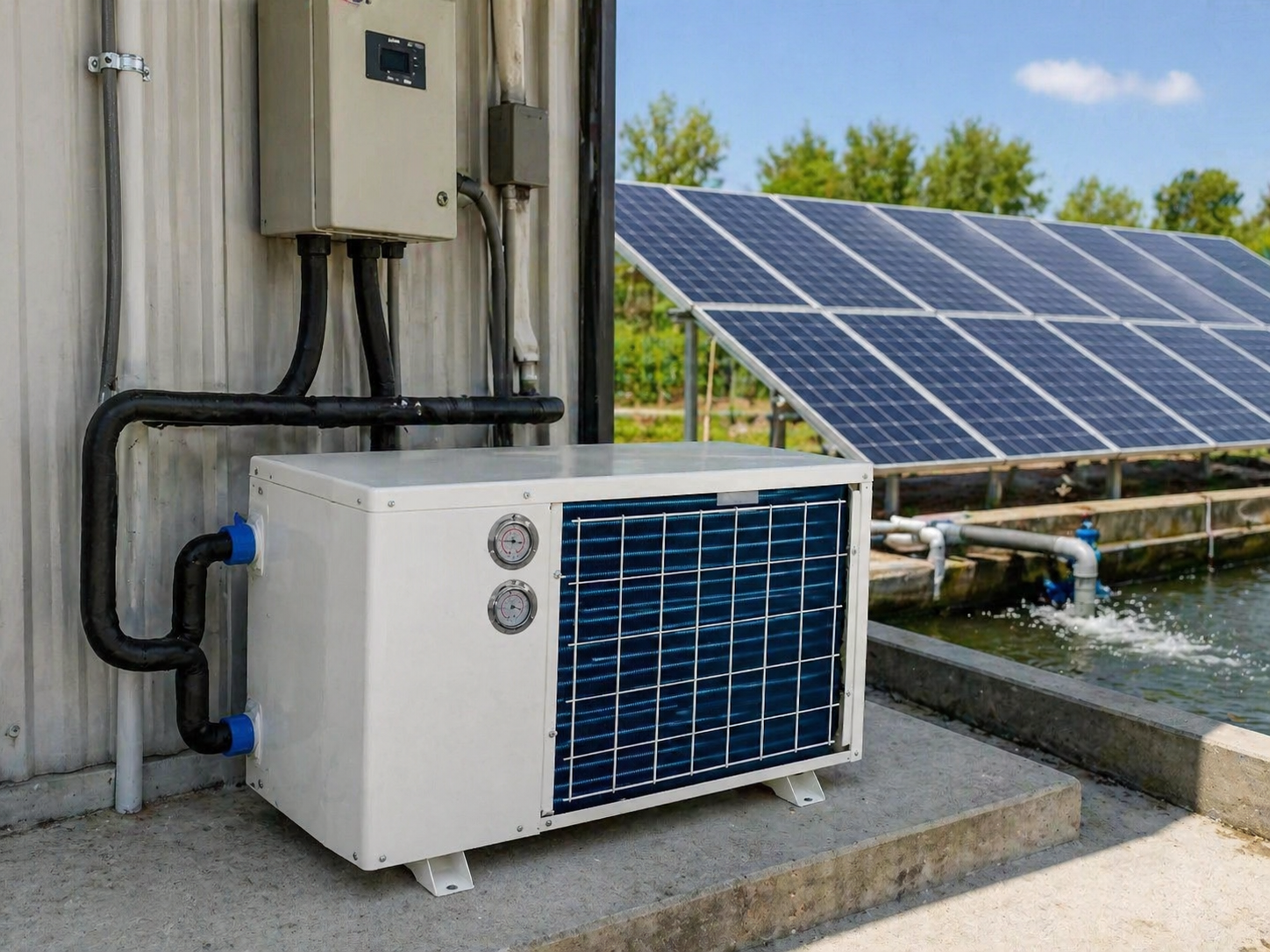
When Should You Choose a Solar Powered Industrial Chiller?
A solar powered industrial chiller should be reviewed when the cooling system needs to operate in a remote site, outdoor equipment area, agricultural process, testing site, laboratory, or industrial location where grid power is limited, unstable, expensive, or supported by solar energy. In many projects, the practical solution is a hybrid system combining solar panels, battery storage, inverter, grid power, or generator backup to support stable process cooling.
Final feasibility depends on cooling capacity, operating hours, solar radiation, battery capacity, inverter sizing, compressor starting current, ambient temperature, and backup power strategy.
When Do You Need This Custom Direction?
Remote or Off-Grid Site
Remote sites may need solar-assisted or hybrid cooling when stable grid power is not available or when generator operation should be reduced.
Outdoor Equipment Cooling
Outdoor equipment, test stations, agricultural systems, and remote process units may require process cooling with solar input and backup power review.
Unstable or Expensive Power Supply
Solar-assisted cooling can be reviewed when the site has unstable power, high electricity cost, or a requirement to reduce grid dependency.
Low to Medium Cooling Load
Solar-powered cooling is usually more practical for small to medium cooling loads where energy demand, battery size, and inverter capacity can be reasonably matched.
Solar Chiller Feasibility Matrix
Use this matrix to check whether a solar-powered, solar-assisted, or hybrid power chiller direction is practical for your project. Solar chiller selection should review cooling load, operating schedule, solar radiation, battery capacity, inverter sizing, compressor starting current, backup power, ambient temperature, and installation layout before confirming the final design.
| Project Condition | Recommended Design Direction | Typical Use Cases | Key Engineering Review | Next Step |
|---|---|---|---|---|
| Remote site cooling | Solar-assisted industrial chiller | Remote equipment, agricultural process, outdoor testing site, limited-power industrial site | Cooling load, solar radiation, operating hours, battery size, inverter, backup power | Submit Solar Feasibility Requirements |
| Unstable grid power | Hybrid power process chiller | Factory with unstable power, rural workshop, temporary site, process cooling with backup power demand | Grid quality, backup power, compressor starting current, voltage stability, runtime | Submit Power Conditions |
| Outdoor equipment cooling | Outdoor solar-assisted chiller | Outdoor machinery, test station, field process cooling, exposed equipment area | Ambient temperature, cabinet protection, condenser airflow, solar panel location, service access | Submit Site Layout |
| Small process cooling | Compact solar-assisted chiller | Laboratory, test bench, small equipment loop, pilot system | Cooling load, duty cycle, battery autonomy, pump power, temperature stability | Submit Compact Cooling Requirements |
| Energy-saving support | Solar-assisted hybrid cooling system | Sites using grid power with solar support, defined operating schedules, partial solar contribution | Solar contribution, grid backup, control logic, cost review, energy balance | Submit Hybrid Cooling Review |
Not sure whether a solar-assisted or hybrid power chiller is practical for your site? Use the Industrial Chiller Selection Tool or submit your cooling and power conditions for engineering review.
Solar-Powered Chiller Engineering Design Points
Cooling Load and Energy Balance
The cooling duty should be reviewed together with available solar energy so the chiller load and power system are matched realistically.
Solar Panel and Battery Sizing
Solar input and battery storage should be selected according to location, runtime, autonomy target, and acceptable backup strategy.
Inverter and Compressor Starting Review
Inverter sizing should consider compressor starting current, pump load, control system demand, and operating margin.
Hybrid Power and Backup Strategy
Grid backup, generator backup, or hybrid logic may still be required depending on duty cycle, criticality, and energy balance review.
Ambient Temperature and Heat Rejection
Outdoor solar projects often need simultaneous review of local ambient temperature, cabinet exposure, and condenser heat rejection conditions.
Pump, Tank, and Control Logic
Pump power, tank volume, and control schedule should be coordinated with available energy and process cooling stability requirements.
Technical Specification Direction
| Parameter | Typical Direction / Options | Engineering Notes |
|---|---|---|
| Cooling Capacity | Project-specific / small to medium solar-assisted systems | Cooling capacity should be reviewed together with expected operating schedule and available energy. |
| Chiller Type | Solar-powered / solar-assisted / hybrid power industrial chiller | The final power architecture depends on site conditions and project energy balance review. |
| Cooling Method | Air-cooled / water-cooled / project-specific | Cooling method should be matched to the application and heat rejection environment. |
| Power Source | PV solar / battery / inverter / grid backup / generator backup | Most practical systems need review of hybrid or backup power rather than solar-only assumptions. |
| Solar Input | Project-specific based on solar radiation and operating hours | Solar availability should be reviewed by location, panel area, and operating schedule. |
| Battery | Optional storage based on runtime and autonomy requirement | Battery capacity depends on duty cycle, night operation, and backup strategy. |
| Inverter | Selected according to compressor start, pump load, control system, and safety margin | Inverter sizing should not be based on nominal load alone. |
| Compressor | Standard / inverter-driven / soft-start / project-specific | Starting method should be coordinated with the available power system and startup behavior. |
| Cooling Medium | Water / glycol / clean water / process fluid by review | Cooling medium affects pump load and process stability requirements. |
| Pump | Standard / high-flow / high-pressure / DC or AC pump by review | Pump direction should be reviewed according to loop resistance and energy budget. |
| Water Tank | Built-in / external / buffer tank | Tank volume should match loop stability and energy-managed operation. |
| Control | Digital / PLC / energy management / alarm output / remote monitoring | Control logic may need to manage solar input, battery state, and backup switching. |
| Voltage | DC / AC / 220V / 380V / custom by project | Electrical configuration should follow the actual inverter and site power architecture. |
| Protection | Overload, phase, low voltage, high/low pressure, flow, anti-freeze, high temperature alarm | Protection scope should reflect both refrigeration and power-system conditions. |
| Installation | Outdoor / remote site / equipment-side / project-specific layout | Layout should consider solar panel location, cabinet exposure, and service access. |
| Documentation | Energy balance sheet, layout drawing, wiring diagram, datasheet, inspection photos | Documentation should support both cooling review and power-system review. |
Example Direction: Solar-Assisted Industrial Chiller for Remote Process Cooling
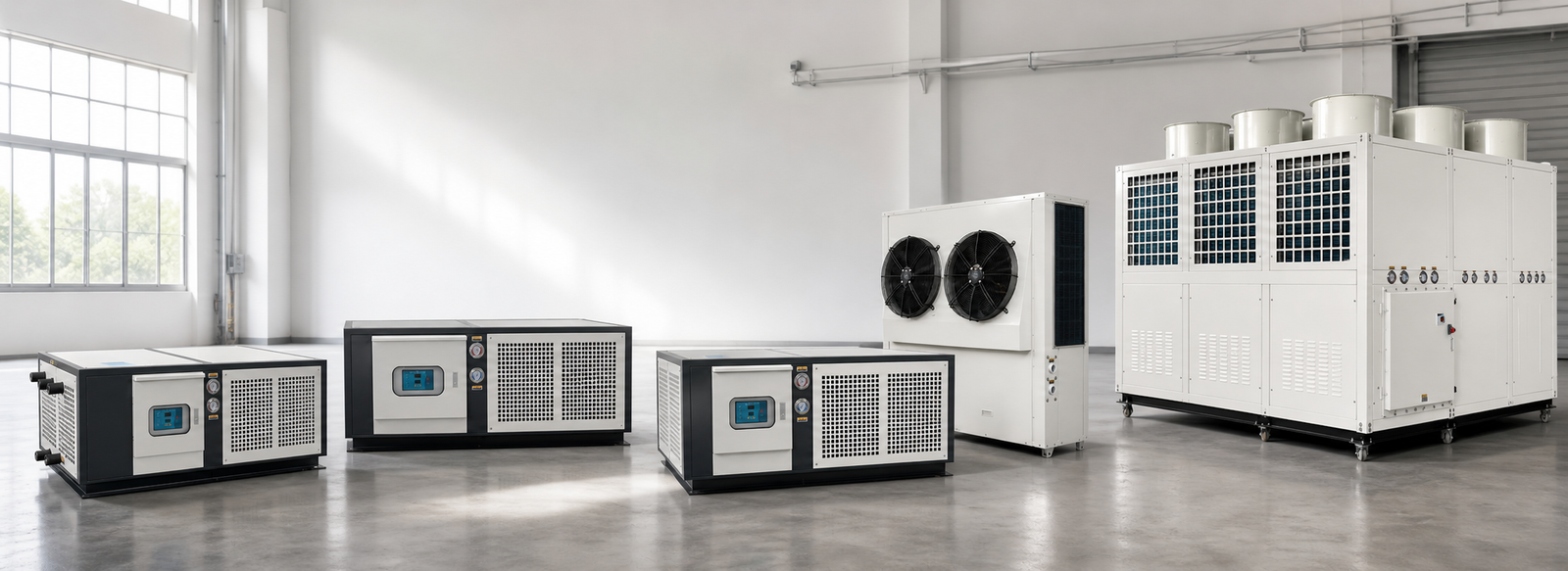
Solar-Assisted Industrial Chiller for Remote or Limited-Power Process Cooling
APT can configure solar-assisted industrial chillers for projects where the customer needs process cooling with solar input, battery storage, inverter power, grid backup, or generator backup. The final configuration should be reviewed according to cooling capacity, operating schedule, local solar conditions, battery autonomy, compressor starting current, pump power, ambient temperature, and site layout.
Suitable vs Not Recommended Conditions
Suitable For
- Remote process cooling
- Outdoor equipment cooling
- Agricultural process cooling
- Laboratory or test bench cooling
- Small to medium cooling load
- Solar-assisted factory cooling
- Sites with unstable grid power
- Hybrid solar + grid systems
- Projects requiring energy balance review
- Applications with clear operating schedule
Not Recommended For
- Large continuous cooling loads without enough solar and battery capacity
- Sites without backup power for critical cooling
- Unknown cooling load or runtime
- High ambient outdoor projects without condenser review
- Projects requiring 24/7 cooling without sufficient energy storage
- Hazardous areas without explosion-proof safety review
- Very low-temperature applications without special refrigeration review
- Installations without clear electrical and safety design
Application Fit Matrix
Solar-assisted cooling is not suitable for every application. This matrix helps identify whether the application is technically reasonable and what information should be submitted before APT recommends a solar-powered, solar-assisted, hybrid, or standard electric chiller direction.
| Application | Fit Level | Typical Cooling Need | Engineering Review | Next Action |
|---|---|---|---|---|
| Remote Equipment Cooling | High | Cooling support at remote or limited-power equipment locations | Energy balance, runtime, backup power, service access | Submit Remote Cooling Requirements |
| Outdoor Testing Cooling | Medium to High | Solar-assisted cooling for outdoor test stations or field units | Ambient temperature, cabinet protection, power architecture | Submit Outdoor Test Conditions |
| Agricultural Process Cooling | Medium | Cooling support for outdoor or rural process applications | Solar availability, operating schedule, dust exposure, backup strategy | Submit Process Cooling Details |
| Laboratory Process Cooling | Medium to High | Low to medium-duty cooling with hybrid power support | Cooling load, battery autonomy, inverter sizing, temperature stability | Review Laboratory Cooling |
| Small Production Line Cooling | Medium | Energy-assisted cooling for defined process schedules | Duty cycle, solar contribution, backup power, cost review | Submit Production Cooling Requirements |
| Solar-Assisted Factory Cooling | Medium | Partial solar support for process cooling where grid still exists | Energy management, hybrid control, inverter and compressor coordination | Submit Hybrid Factory Cooling Review |
| Backup Cooling for Unstable Power | Medium to High | Process cooling support where grid power quality is inconsistent | Grid stability, battery support, backup transition, protection logic | Submit Backup Power Conditions |
| Pilot Process Cooling | Medium | Project development or pilot cooling with hybrid power review | Cooling load, runtime, inverter margin, control flexibility | Submit Pilot Cooling Requirements |
If your application is not listed above, APT can still review the cooling load, power architecture, solar contribution, and backup strategy to determine whether a solar-assisted chiller is practical.
Quote Information Checklist for Solar Powered Industrial Chillers
What APT Needs to Review
Solar chiller projects depend on energy review as much as cooling duty. Sharing power conditions, operating schedule, solar availability, and backup strategy early helps confirm whether a solar-assisted or hybrid power direction is practical.
- Application or machine type
- Required cooling capacity or heat load
- Target chilled-water temperature
- Operating hours per day
- Continuous or intermittent cooling
- Location and destination country
- Local ambient temperature
- Indoor or outdoor installation
- Available solar panel area
- Solar radiation or project location
- Battery storage requirement
- Required backup power: grid or generator
- Inverter voltage and power requirements
- Compressor starting requirement
- Flow rate and pump pressure
- Coolant type
- Water tank requirement
- Voltage / phase / frequency
- Control requirements: digital controller, PLC, alarm, remote monitoring
- Photos, layout drawings, machine drawings, existing equipment data
Related Custom Chiller Pages
Solar Powered Industrial Chiller FAQ
What is a solar powered industrial chiller?
A solar powered industrial chiller is a custom process cooling system reviewed for solar-assisted or hybrid power operation, where part or all of the electrical supply may involve PV solar, battery storage, inverter support, and backup power planning.
Is a solar powered chiller completely off-grid?
Not always. Many practical projects use a hybrid structure with solar input plus battery, grid, or generator backup rather than assuming fully off-grid operation in all conditions.
When do I need a solar-assisted industrial chiller?
You may need a solar-assisted industrial chiller when grid power is limited, unstable, expensive, or when the site has a defined solar resource that can support part of the cooling duty.
What information is required before designing a solar powered chiller?
APT should review the cooling load, target water temperature, operating hours, project location, solar availability, battery requirement, inverter plan, compressor starting requirement, backup power strategy, and installation layout before recommending a final design direction.
Can APT design a hybrid solar, battery, and grid powered chiller?
Yes. APT can review hybrid power direction combining solar panels, battery storage, inverter, grid power, or generator backup according to the project energy balance and process cooling needs.
Why is inverter sizing important for a solar chiller?
Inverter sizing is important because compressor starting current, pump load, control system demand, and operating margin may be higher than nominal running power alone suggests.
Can a solar powered chiller run at night?
It may run at night if the system includes sufficient battery storage or backup power, but night operation should be reviewed according to runtime requirement, energy reserve, and critical cooling demand.
Is solar powered cooling suitable for large industrial loads?
It can be suitable for some projects, but large continuous loads usually require careful review of solar input, battery size, hybrid support, and the overall energy balance before confirming feasibility.
Can solar powered chillers be used outdoors?
Yes, some solar-assisted chillers can be reviewed for outdoor use, but cabinet protection, ambient temperature, condenser heat rejection, wiring safety, and maintenance access should be considered.
When should I choose a standard electric chiller instead?
A standard electric chiller may be more suitable when stable grid power is already available, energy storage is limited, solar contribution is too small for the required duty, or the project needs simpler fixed-power operation.
Need a Solar Powered or Hybrid Power Chiller for Your Process?
Share your application, cooling capacity, operating hours, target water temperature, location, ambient temperature, solar panel area, battery requirement, inverter plan, backup power, pump pressure, voltage, and installation layout. APT engineers can review whether a solar powered industrial chiller, solar-assisted chiller, hybrid power chiller, or another custom chiller direction is more suitable for your project.