
24HP Stainless Steel Water Cooled Chiller for Electroplating Bath Cooling
A project-based reference showing how a 24HP stainless steel water cooled industrial chiller can be reviewed for electroplating bath cooling, corrosion-resistant process water design, and stable chemical bath temperature control.
This remains a case reference and preliminary engineering direction. Final material and heat exchanger selection still depends on actual fluid chemistry, contamination level, target bath temperature, and operating duty.
Quick Answer: What Chiller Was Reviewed for This Electroplating Bath Project?
A 24HP stainless steel water cooled industrial chiller was reviewed as the preliminary cooling direction for this electroplating bath cooling project. The design direction supports stable bath temperature control with corrosion-resistant process-side material review and water cooled heat rejection.
Project Background
This project direction relates to an electroplating workshop where the plating process required stable bath temperature control under corrosive or chemically sensitive fluid conditions. The plating bath cooling review focused on maintaining process consistency while protecting the cooling circuit from chemistry-related material risk.
The site had condenser water available, so a water cooled industrial chiller was considered for stable heat rejection during continuous plating production. Because plating solution compatibility was a key concern, stainless steel process-side review was required before discussing final exchanger arrangement, secondary loop need, and quotation details.
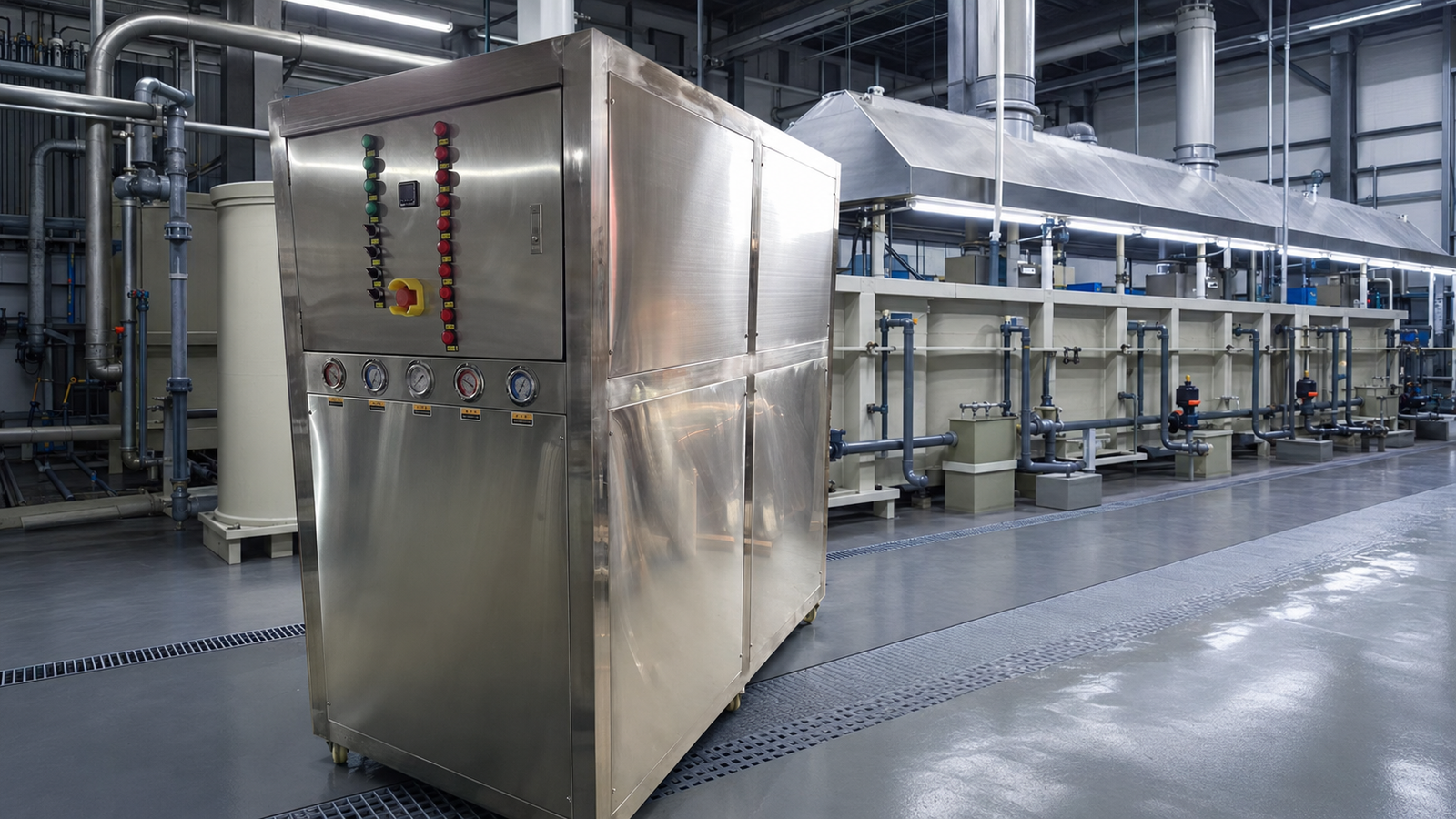
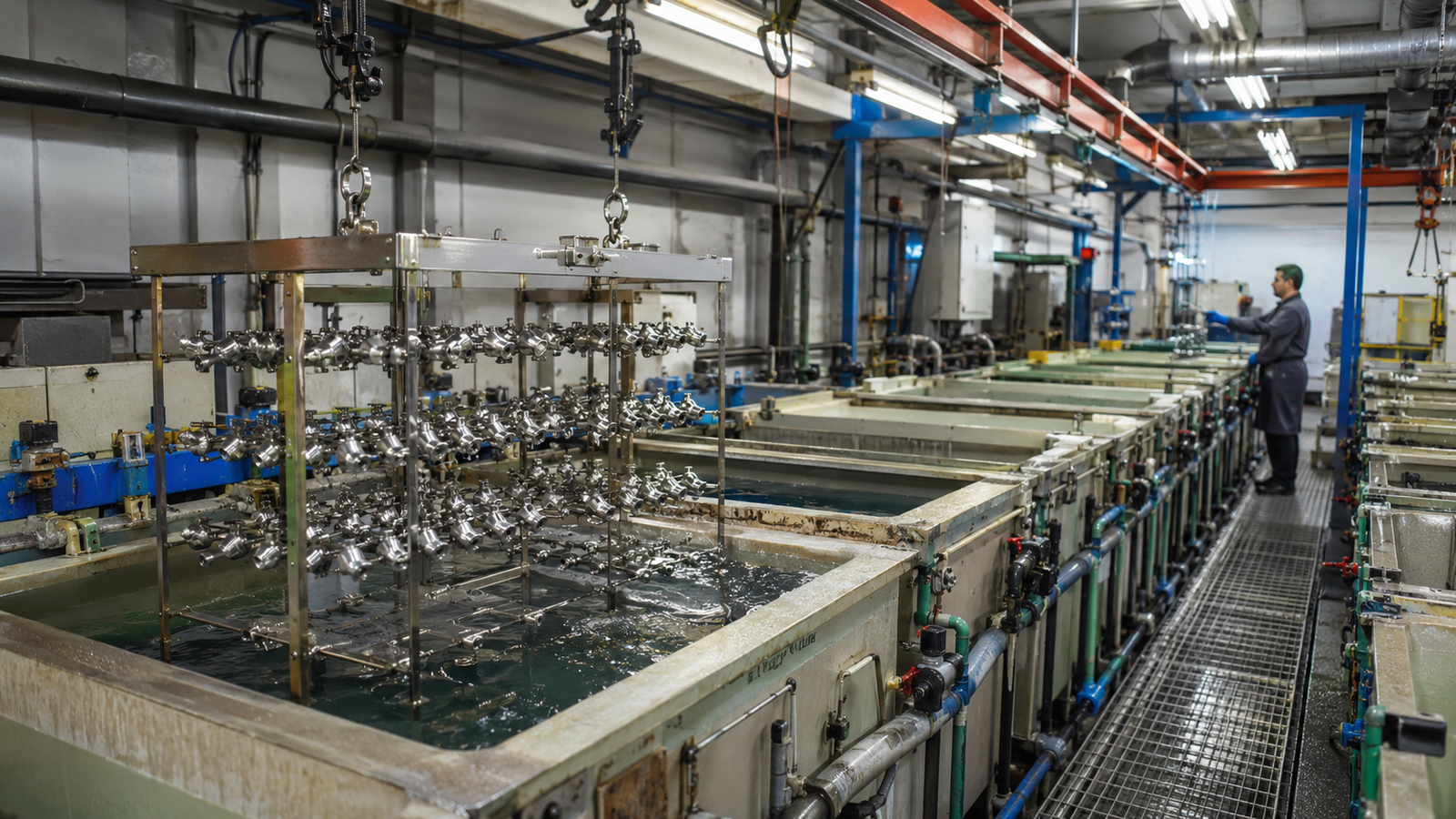
Cooling Challenge
Bath Chemistry and Corrosion Risk
Process fluid chemistry may affect exchanger material, piping, and whether direct or secondary loop cooling is suitable.
Plating Bath Heat Load
Electrochemical heat generation and operating duty must be reviewed before confirming 24HP as the final direction.
Target Bath Temperature
Bath stability directly affects plating quality, bath life, and repeatability across the production schedule.
Heat Exchanger Compatibility
Heat exchanger type and material should match chemistry, contamination level, and maintenance approach.
Condenser Water Condition
Water cooled design depends on condenser water temperature, water quality, scaling risk, and available flow.
Pump Flow and Pressure
Required flow and loop resistance must match the bath coil, plate exchanger, or secondary circuit design.
Secondary Loop Requirement
Some plating processes benefit from an isolation loop to reduce direct material exposure risk.
Scaling and Cleaning
Water quality, contamination, and cleaning access all affect long-term reliability of the cooling circuit.
24HP Stainless Steel Water Cooled Industrial Chiller Solution
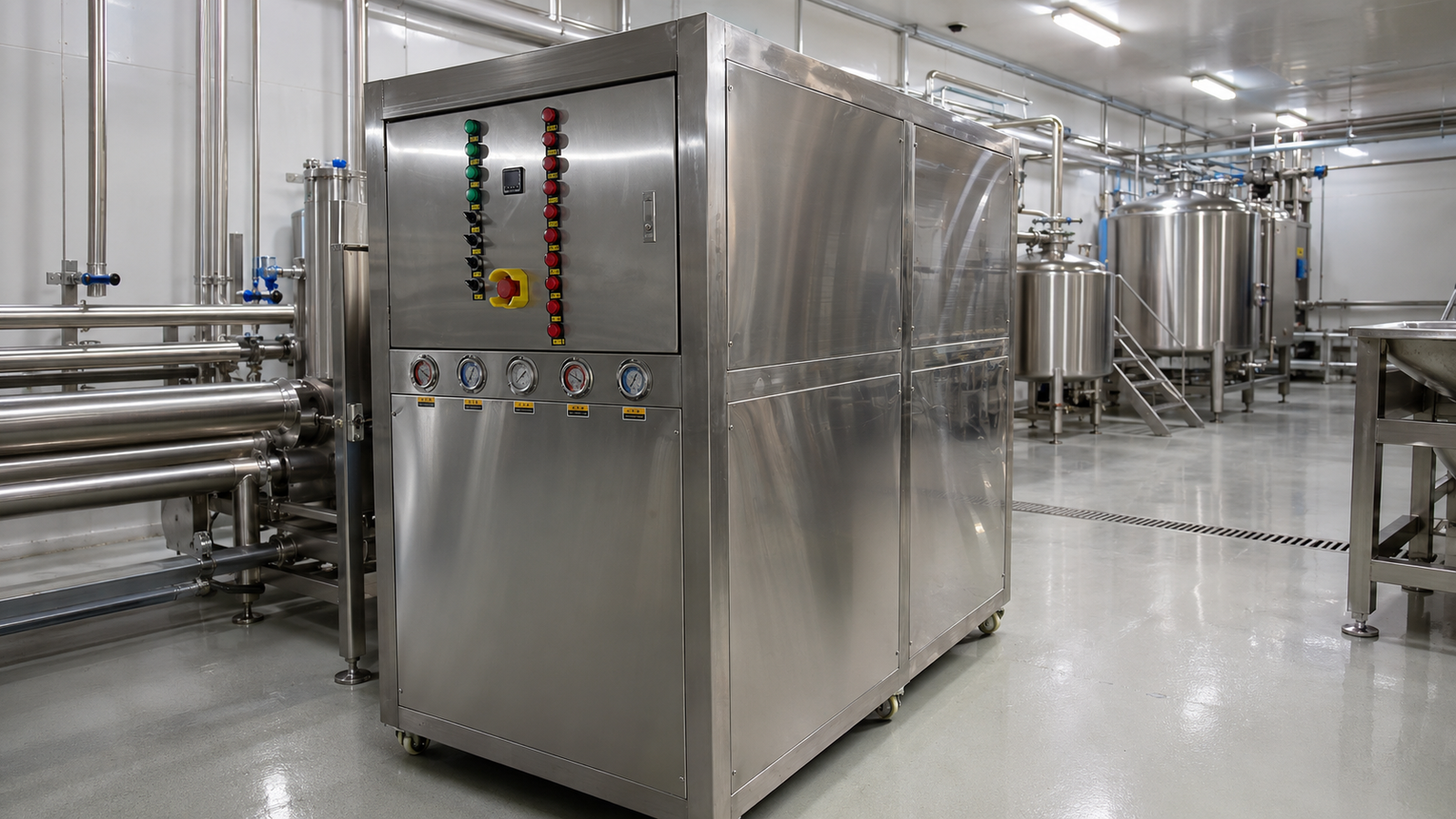
A 24HP stainless steel water cooled industrial chiller was considered as the preliminary case direction for this electroplating bath cooling project. The water cooled design supports stable heat rejection during longer operating hours where condenser water is available on site.
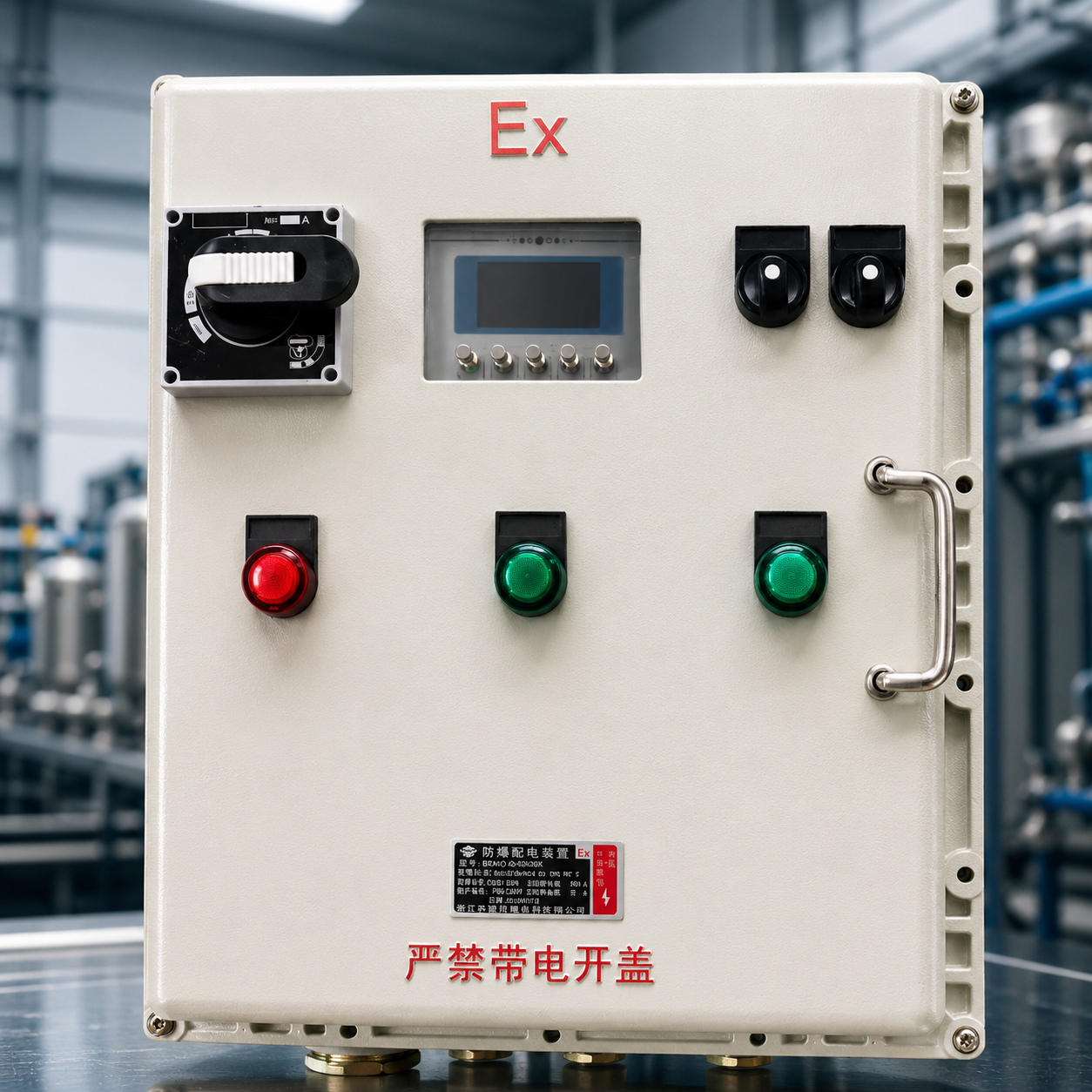
The proposed direction includes an industrial compressor system, corrosion-aware process-side review, heat exchanger selection by chemistry and cooling loop design, circulation pump selected by required flow and head, and a digital temperature controller for stable bath temperature management.
Final configuration should still be confirmed according to actual bath chemistry, bath volume, heat load, target temperature, condenser water condition, voltage, and installation layout.
Engineering Review Matrix
| Engineering Item | Why It Matters | Data to Confirm |
|---|---|---|
| Bath Chemistry | Determines whether stainless steel is suitable and whether a secondary loop or other material review is needed. | pH, chloride level, chemical composition, contamination, and corrosion risk. |
| Bath Volume | Helps define the total thermal mass and pull-down requirement of the plating system. | Tank volume, tank dimensions, and total fluid quantity. |
| Heat Load | Confirms whether 24HP is suitable as a reference direction. | Total cooling demand from plating operation and related equipment. |
| Target Bath Temperature | Defines the controller setpoint and process stability requirement. | Required operating temperature and acceptable fluctuation. |
| Material Compatibility | Protects the process-side cooling circuit from chemistry-related damage. | Compatible materials for exchanger, piping, seals, and wetted components. |
| Heat Exchanger Type | Matches cooling method to chemistry, cleanliness, and maintenance conditions. | Coil, plate, shell-and-tube, or indirect secondary loop direction. |
| Flow Rate | Ensures enough circulation through the bath loop or secondary cooling circuit. | Required L/min or m3/h for the process-side circuit. |
| Pump Pressure | Checks whether the circulation pump can overcome real loop resistance. | Pump head, pipe length, filters, exchanger pressure loss, and elevation change. |
| Condenser Water Condition | Affects stable heat rejection and long-term water cooled performance. | Condenser water temperature, water quality, flow availability, and scaling risk. |
| Water Quality | Impacts cleaning frequency, scaling, and cooling circuit reliability. | Suspended solids, contamination risk, filtration, and water treatment approach. |
| Secondary Loop Requirement | Reduces direct chemistry exposure when material compatibility is uncertain. | Isolation need, buffer arrangement, and clean-water loop requirement. |
| Voltage and Frequency | Ensures electrical compatibility with factory and export requirements. | Available power supply and destination electrical standard. |
| Operating Hours | Influences compressor duty, condenser review, and service planning. | Working hours per day, weekly production cycle, and continuous duty expectation. |
Recommended Configuration Table
| Item | Preliminary Direction | Notes |
|---|---|---|
| Cooling Method | Water cooled condenser | Selected for stable heat rejection where condenser water is available at site. |
| Capacity Direction | 24HP reference | Final size depends on actual plating bath heat load and production duty. |
| Process-Side Material | Stainless steel / project-reviewed material | Final material selection depends on actual fluid chemistry and contamination condition. |
| Cooling Circuit | Closed-loop process water or secondary loop | Arrangement depends on chemistry, exchanger type, and maintenance preference. |
| Typical Application | Electroplating bath / anodizing bath / chemical process tank | Suitable for plating lines where corrosion-resistant cooling design is required. |
| Outlet Temperature | Project-defined by bath requirement | Final setpoint follows the actual plating or anodizing process temperature window. |
| Pump Selection | By required flow and head | Pump choice must follow real exchanger resistance and process-side piping layout. |
| Power Supply | 380-460V, 50/60Hz by destination | Electrical configuration should match the actual factory or export destination. |
| Final Review | Bath chemistry / heat load / material / flow / pump head / condenser water | Engineering confirmation is required before quotation and final model release. |
Why Stainless Steel Water Cooled Chiller Was Considered
Better Compatibility Direction
Stainless steel process-side review can be more suitable than standard materials where chemistry sensitivity or corrosion risk exists.
Stable Water Cooled Performance
Water cooled design supports stable condenser-side heat rejection for continuous plating production.
Supports Secondary Loop Review
Project review can include indirect cooling when direct contact with process fluid is not preferred.
The final configuration should not be presented as fully corrosion-proof, maintenance-free, or compatible with all chemicals. Final material selection still depends on the actual bath chemistry, pH, chloride level, contamination level, temperature range, cleaning method, and operating conditions.
Project Value
More Stable Bath Temperature
Supports practical bath temperature review for plating quality and process repeatability.
Better Compatibility Discussion
Creates a clearer engineering path for process-side material review before final selection.
Reduced Corrosion-Related Concern
Helps reduce cooling circuit material risk compared with non-reviewed standard process-side arrangements.
Clearer Data Path
Improves quotation discussion when bath chemistry, heat load, and water data are prepared in advance.
Supports Process Continuity
Stable cooling direction can help support longer operating cycles and more consistent plating conditions.
Related Pages
24HP Stainless Steel Water Cooled Chiller
Review the related product page for this corrosion-resistant water cooled chiller direction.
ApplicationElectroplating Chiller
Review broader plating bath, anodizing, and surface treatment cooling requirements.
CategoryWater Cooled Chillers
Compare the main APT water cooled chiller directions for industrial process cooling.
CustomCustom Industrial Chiller
Review custom process cooling directions when chemistry, voltage, or layout needs special support.
GuideChiller Selection Guide
Review supporting engineering topics before final chiller selection and quotation.
GuideFluid and Water Quality Guide
Review water quality, corrosion risk, scaling, and fluid compatibility considerations for cooling circuits.
PDFDownload Case PDF
Download the concise PDF reference sheet for this 24HP stainless steel electroplating cooling case.
QuoteRequest a Quote
Submit similar electroplating cooling requirements for engineering review.
24HP Stainless Steel Water Cooled Chiller for Electroplating Bath Cooling FAQ
Why use a stainless steel chiller for electroplating bath cooling?
Stainless steel may be reviewed when the cooling circuit needs better material compatibility than standard process-side materials. Final suitability still depends on the actual bath chemistry and contamination condition.
Is stainless steel always suitable for plating bath fluid?
No. Stainless steel is not automatically suitable for every plating chemistry. Final material selection depends on actual fluid chemistry, pH, chloride level, contamination, cleaning method, and operating temperature.
Why choose a water cooled design for electroplating?
Water cooled chillers can offer stable heat rejection where condenser water is available, which can be useful for larger heat loads, continuous plating production, and indoor plant-room installations.
Can this chiller cool anodizing baths too?
It can be reviewed for anodizing bath cooling as well, but final exchanger type, material, and loop arrangement should follow the actual anodizing chemistry and temperature requirements.
What data is required before final selection?
Prepare bath chemistry, bath volume, target bath temperature, total heat load, flow rate, pump pressure, condenser water condition, water quality, voltage, and installation layout.
Is a secondary loop needed for electroplating cooling?
It may be needed when direct process-side material exposure is risky or when process fluid cleanliness and maintenance considerations favor an isolated cooling loop.
What water quality data should be confirmed?
Confirm contamination risk, scaling tendency, suspended solids, filtration plan, and both process-side and condenser-side water quality conditions.
Can APT customize heat exchanger material?
Yes. APT can review exchanger material, loop arrangement, pump, tank, voltage, and control logic according to actual bath chemistry and project requirements.
Can the chiller handle corrosive fluids directly?
Sometimes it can be reviewed for direct contact, but this should never be assumed. Final confirmation depends on fluid chemistry, compatible materials, exchanger design, and maintenance approach.
What should be checked before quotation?
Before quotation, confirm bath chemistry, target temperature, heat load, flow, pump head, condenser water condition, voltage, installation environment, and whether a secondary loop is preferred.
Need a Similar Chiller for Electroplating Bath Cooling?
Share your plating process, bath chemistry, bath volume, target bath temperature, total heat load, required flow, pump pressure, condenser water condition, water quality, voltage, and installation layout. APT engineers can review whether a similar 24HP stainless steel water cooled chiller direction is suitable for your project.