
3HP Compact Air Cooled Chiller for CNC Spindle Cooling
A project-based reference showing how a 3HP compact air cooled industrial chiller can be reviewed for CNC spindle cooling, machine-side coolant loop temperature control, and precision machining support.
This remains a case reference and preliminary engineering direction. Final configuration depends on spindle power, heat load, target temperature, coolant type, flow rate, pump pressure, ambient temperature, and installation layout.
Quick Answer: What Chiller Was Reviewed for This CNC Spindle Cooling Project?
A 3HP compact air cooled industrial chiller was reviewed as the preliminary cooling direction for this CNC spindle cooling project. The design direction supports independent closed-loop cooling for the spindle and machine-side coolant circuit with compact installation and simple air cooled heat rejection.
Project Background
This project direction relates to a precision machining workshop where stable cooling was required for a CNC spindle and machine-side coolant loop. The cooling discussion focused on maintaining suitable spindle temperature control while keeping the installation compact, independent, and practical for a machine-side workshop layout.
Because the project preferred equipment-side cooling without a cooling tower or central chilled-water connection, a 3HP compact air cooled industrial chiller was reviewed as the preliminary cooling direction. The engineering review centered on spindle power, spindle heat load, target coolant temperature, flow rate, pump pressure, coolant cleanliness, ambient ventilation, and machine interface requirements.
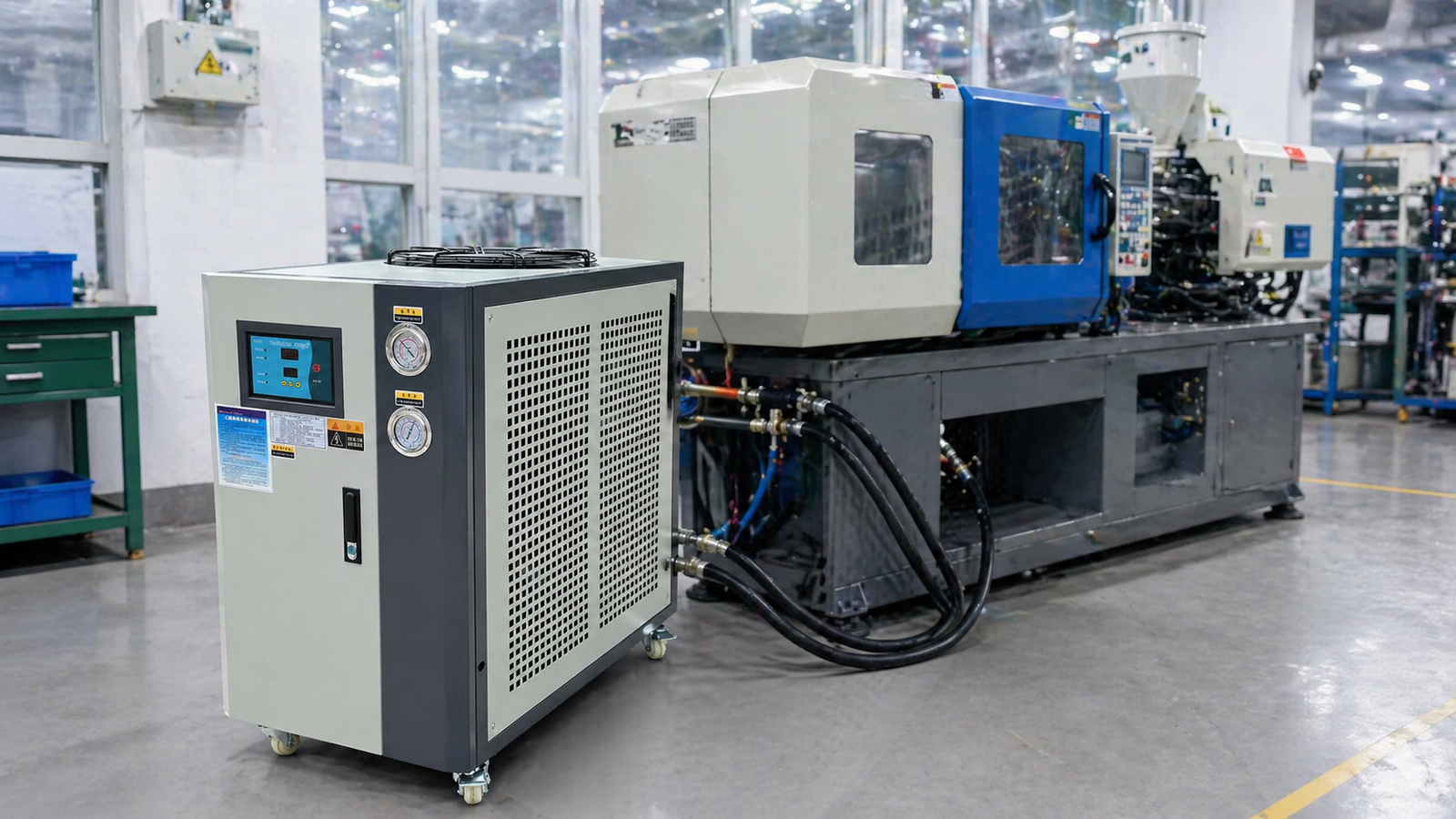
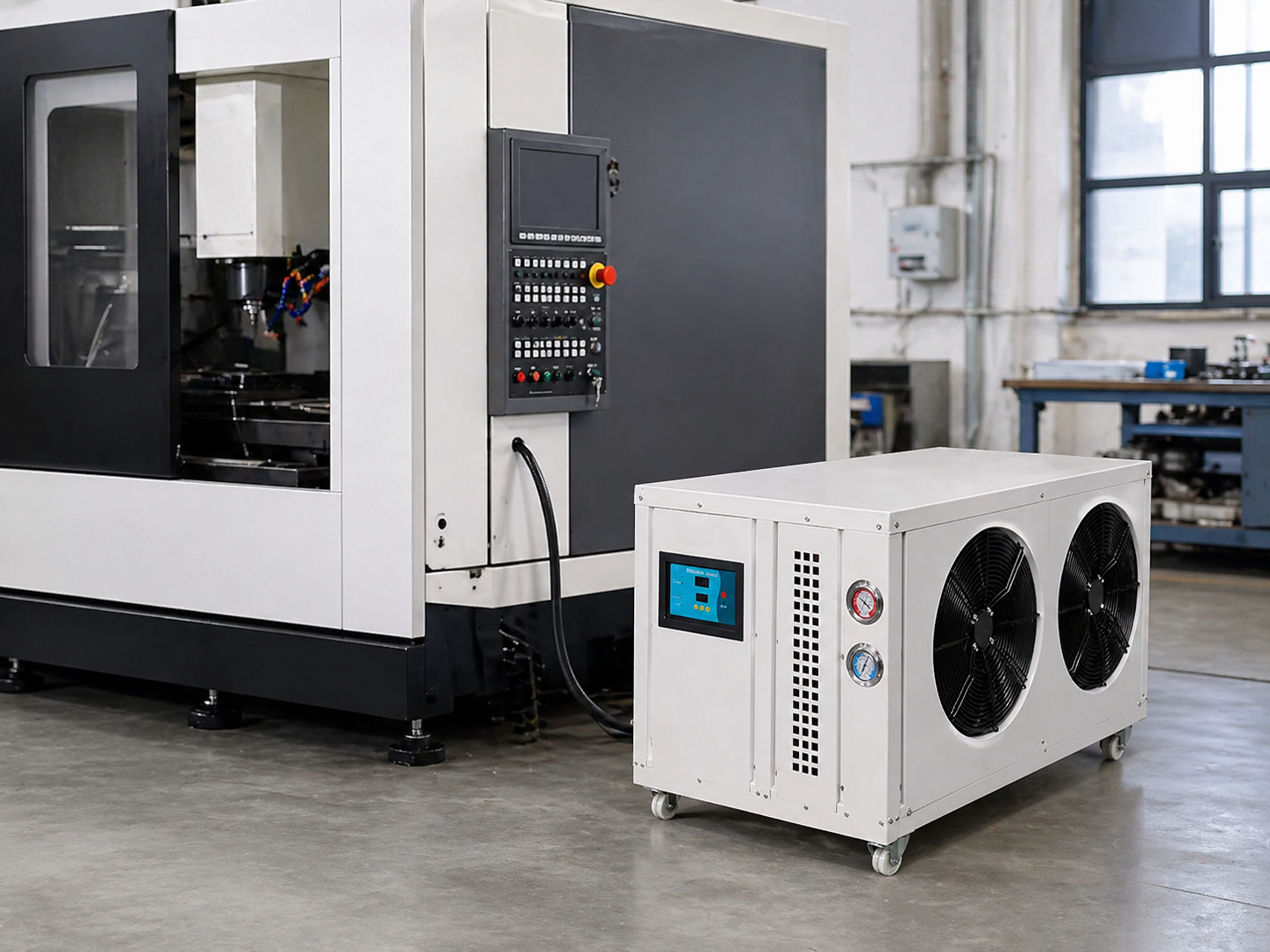
Cooling Challenge
Spindle Heat Load
Spindle power and real heat rejection demand determine whether 3HP is a suitable reference direction.
Target Coolant Temperature
Required coolant setpoint and acceptable fluctuation affect controller direction and stability review.
Temperature Stability
Precision machining may need tighter coolant stability than general utility cooling.
Flow Rate
Useful spindle cooling depends on enough circulation through the real equipment loop.
Pump Pressure
Loop resistance, hose routing, filters, and heat exchanger losses affect pump head requirement.
Coolant Cleanliness
Water or coolant quality affects spindle circuit reliability, fouling risk, and maintenance interval.
Filtration and Contamination Risk
Filtration logic may be needed when metal fines or workshop contamination can affect the loop.
Compact Installation Space
Machine-side installation often has limited cabinet and hose routing space.
Ambient Temperature and Ventilation
Workshop heat and airflow affect condenser performance and placement review.
Alarm or Interlock Interface
The chiller may need alarm or machine interlock communication for operational safety.
3HP Compact Air Cooled Industrial Chiller Solution
A 3HP compact air cooled industrial chiller was considered as the preliminary cooling path for this CNC spindle project. The design direction was reviewed because the workshop needed stable equipment-side cooling for the spindle and machine-side coolant loop while keeping the installation compact and independent.
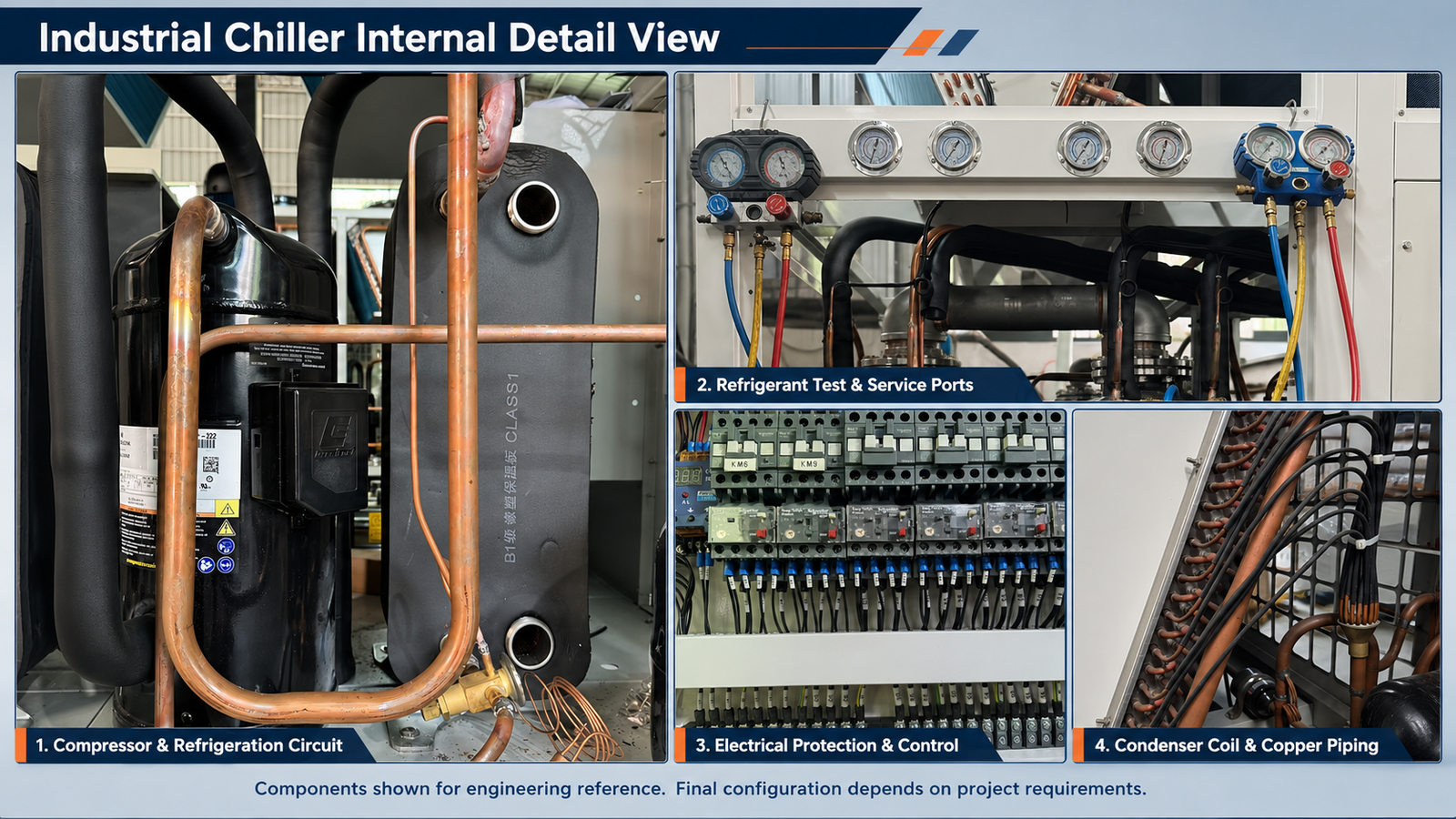
The proposed direction includes a compact air cooled condenser, industrial compressor, built-in water tank and circulation pump, digital temperature controller, and closed-loop process water or coolant circuit. Flow, pressure, compressor, pump, and overload protection were all part of the preliminary review logic.
This direction can be suitable for CNC spindle cooling, machine tool cooling, small laser equipment, laboratory equipment, and independent machine-side process cooling. Final selection still depends on spindle power, heat load, target temperature, coolant type, flow rate, pump pressure, ambient temperature, and installation layout.
Engineering Review Matrix
| Engineering Item | Why It Matters | Data to Confirm |
|---|---|---|
| Spindle Power | Spindle motor power helps estimate the likely cooling demand direction. | Rated spindle power and operating duty cycle. |
| Spindle Heat Load | Real heat rejection must be reviewed before confirming 3HP as the final selection. | Total spindle and related machine-side heat load. |
| Target Coolant Temperature | Defines cooling objective and machine operating requirement. | Required outlet temperature and acceptable fluctuation. |
| Temperature Stability | Precision machining may require tighter coolant stability than general utility cooling. | Allowable temperature drift during operation. |
| Flow Rate | Enough circulation is required to remove heat from the spindle loop effectively. | Required L/min or m3/h through the equipment loop. |
| Pump Pressure | Pump head must overcome loop resistance, fittings, and hose losses. | Pump head target, filters, heat exchanger, and line resistance. |
| Coolant Type | Water or coolant choice affects compatibility, corrosion, and service planning. | Water, glycol, or machine-specific coolant requirement. |
| Filtration Requirement | Contamination control can affect spindle reliability and maintenance interval. | Filter type, cleanliness standard, and contamination risk. |
| Hose Length | Long hose runs increase pressure loss and affect practical installation. | Supply and return hose route and total length. |
| Ambient Temperature | Workshop ambient condition affects condenser margin and placement review. | Normal and peak ambient temperature around the machine. |
| Installation Space | Compact layout is often a key reason for choosing an equipment-side chiller direction. | Available footprint, service clearance, and ventilation path. |
| Voltage and Frequency | Electrical compatibility must match the destination machine or workshop supply. | Available voltage, frequency, and phase requirement. |
| Alarm Interface | Machine interlock or alarm communication may be required for safe operation. | Alarm output, digital input, or controller interface requirement. |
Recommended Configuration Table
| Item | Preliminary Direction | Notes |
|---|---|---|
| Cooling Method | Compact air cooled condenser | Simple air cooled heat rejection supports machine-side installation without cooling tower dependence. |
| Capacity Direction | 3HP reference | Final size must still be confirmed by real spindle power and heat load. |
| Cooling Circuit | Closed-loop machine-side cooling | Supports spindle and related coolant loop temperature control near the equipment. |
| Typical Application | CNC spindle / machine tool / precision machining equipment | Suitable for independent equipment-side cooling where compact installation is preferred. |
| Outlet Temperature | Project-defined, often 18-25°C for spindle cooling, subject to machine requirement | Setpoint should match spindle requirement and acceptable process fluctuation. |
| Pump Selection | By required flow and pressure | Pump head and flow must match the real machine loop resistance. |
| Power Supply | 220V or 380-460V, 50/60Hz by destination | Electrical direction depends on destination supply and machine integration requirement. |
| Final Review | Spindle power / heat load / flow / pump pressure / coolant quality / installation space | Engineering confirmation is required before quotation and final model selection. |
Why Compact Air Cooled Chiller Was Considered
Compact Layout Fits Machine-Side Installation
Compact chiller structure is often easier to place near an individual CNC machine or small machining cell.
No Cooling Tower Required
Air cooled heat rejection simplifies installation where central chilled water is not preferred.
Supports Independent Closed-Loop Cooling
Independent cooling helps improve coolant temperature control for spindle and small machine loops.
Final selection depends on spindle power, heat load, target temperature, coolant type, flow rate, pump pressure, ambient temperature, and installation layout. This page should not be interpreted as guaranteed machining accuracy or as a chiller direction that fits every CNC spindle without engineering review.
Project Value
More Stable CNC Spindle Cooling
Supports better temperature control review for spindle and machine-side coolant circuits.
Compact Equipment-Side Cooling Direction
Helps match the chiller direction to limited machine-side installation space.
Better Coolant Temperature Control
Independent loop review supports more consistent coolant management than open utility assumptions.
Reduced Dependency on Central Cooling Infrastructure
Supports installations where standalone air cooled cooling is more practical than central plant connection.
Clear Engineering Path for Pump and Flow Review
Encourages practical review of loop resistance, flow requirement, and pump head before quotation.
Related Pages
3HP Compact Air Cooled Industrial Chiller
Review the related product direction for spindle, machine tool, and small independent process cooling projects.
ApplicationCNC Machine Tool Cooling
Review the related application page for CNC spindle and machine-side coolant loop cooling.
GuideChiller Selection Guide
Review supporting engineering topics before final chiller selection and quotation.
CategoryAir Cooled Chillers
Review the broader APT air cooled industrial chiller category for independent machine-side cooling applications.
GuidePump Flow and Pressure Selection
Review how loop resistance, pump head, and circulation requirement affect CNC cooling selection.
GuideTemperature Range and Stability
Review how target temperature and control requirement affect spindle cooling system selection.
PDFDownload Case PDF
Download the concise PDF reference sheet for this 3HP compact air cooled CNC spindle cooling case.
QuoteRequest a Quote
Submit similar CNC spindle and machine-side coolant loop requirements for engineering review.
3HP Compact Air Cooled Chiller for CNC Spindle Cooling FAQ
Is a 3HP chiller enough for CNC spindle cooling?
It can be a suitable preliminary direction for some spindle cooling projects, but final confirmation depends on spindle power, heat load, target temperature, flow rate, and loop resistance.
Why use a compact air cooled chiller for CNC machine cooling?
Compact air cooled chillers are often reviewed because they support independent machine-side installation without cooling tower dependence and can simplify workshop layout.
Can one chiller cool both spindle and coolant loop?
It may be possible in some projects, but final confirmation depends on total heat load, required flow distribution, and whether the machine loop can share one closed circuit properly.
What data is needed before final selection?
Prepare spindle power, heat load, target coolant temperature, required stability, flow rate, pump pressure, coolant type, hose length, ambient condition, and installation layout.
What water temperature is typical for spindle cooling?
Many spindle cooling projects are reviewed around 18-25°C, but the correct target depends on the machine manufacturer's actual requirement.
Why are flow rate and pump pressure important?
Enough circulation and pump head are required to move coolant through the spindle and loop resistance effectively.
Is coolant cleanliness important?
Yes. Coolant cleanliness affects loop reliability, contamination risk, spindle protection, and maintenance interval.
Can the chiller connect to a machine alarm interface?
Yes. Alarm output, interlock, or controller interface can be reviewed according to the CNC machine requirement.
Can APT customize voltage, pump, tank, or control interface?
Yes. APT can review project-specific customization for voltage, pump direction, tank configuration, and control interface.
What should be reviewed before quotation?
Before quotation, confirm spindle power, heat load, target temperature, flow rate, pump pressure, coolant type, hose layout, ambient condition, and electrical requirement.
Need a Similar Chiller for CNC Spindle Cooling?
Share your spindle power, heat load, target coolant temperature, flow rate, pump pressure, coolant type, hose route, ambient condition, and voltage requirement. APT engineers can review whether a similar compact air cooled chiller direction is suitable for your CNC machine cooling project.